
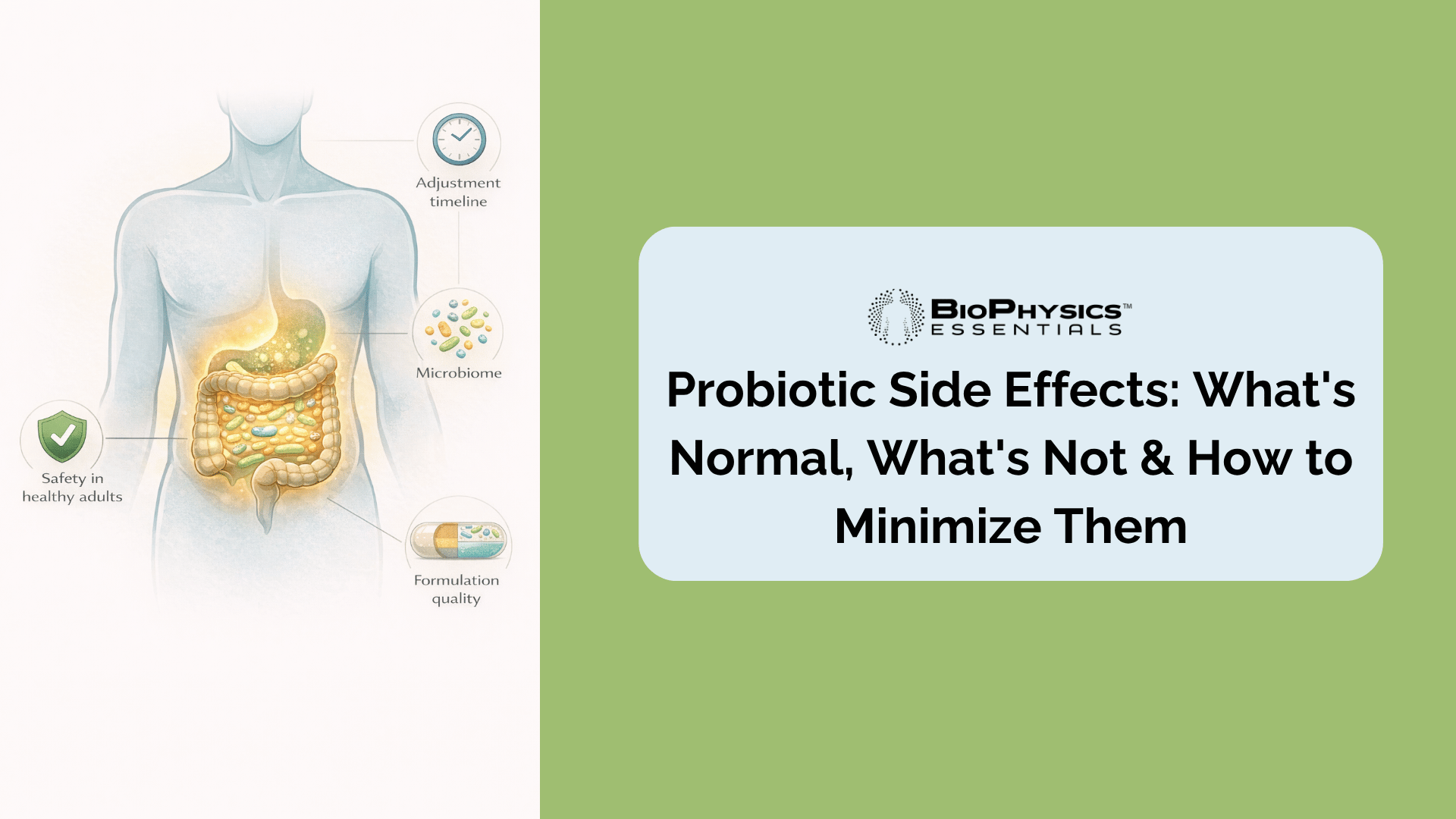
Probiotic Side Effects: What's Normal, What's Not, and How to Minimize Them
A science-backed guide to understanding when side effects are a sign probiotics are working—and when they're a sign something is wrong
You've heard the benefits: better digestion, stronger immunity, reduced bloating. So you start taking a probiotic—and within a few days you're more bloated than before, with gas that rivals a leaky pipe. Is this normal? Are probiotics hurting you? Should you stop?
These are among the most common questions surrounding probiotic use, and the answers depend heavily on context. The clinical literature makes one thing clear from the outset: for most healthy adults, probiotics have an excellent safety record.[1] The vast majority of side effects people experience are temporary, self-limiting, and a predictable consequence of a gut microbiome in the process of reorganizing itself.
But "most people" doesn't mean "all people," and probiotic formulation quality—including the excipients, CFU count, and strain selection—plays a role that most mainstream discussions ignore. This guide breaks down the clinical evidence on probiotic side effects, distinguishes normal from abnormal responses, explains the constipation question in depth, and provides evidence-based strategies for minimizing discomfort from day one.
If you're new to gut health and want to understand why side effects happen in the first place, our overview of 12 signs your gut needs probiotics provides helpful context on the microbiome conditions that most commonly precede side effect-prone adjustment periods.
Key Takeaways
- Most probiotic side effects are temporary. Gas, bloating, and mild digestive changes typically resolve within 3–14 days as the gut microbiome adjusts to new bacterial populations.[2]
- Serious side effects are rare and context-dependent. A pharmacovigilance analysis of over 10 million FDA adverse event reports identified only 74 reports linked to probiotics over 18 years—reflecting a strongly favorable safety profile in the general population.[3]
- Probiotics most often relieve constipation, not cause it. A meta-analysis of 26 randomized controlled trials found probiotic supplementation significantly increased stool frequency by an average of 1.15 times per week.[4]
- People with severely compromised immune systems face elevated risk. Clinical reviews document rare but serious adverse events—including sepsis and bacteremia—primarily in immunocompromised patients, those with central venous catheters, and critically ill individuals.[5]
- Histamine sensitivity can cause probiotic-specific reactions. A subset of individuals with histamine intolerance may respond to certain probiotic strains—particularly those that produce biogenic amines—with headaches, flushing, or worsened digestive symptoms.[6]
- Formulation matters as much as strains. Excipients like microcrystalline cellulose (MCC), magnesium stearate, and titanium dioxide—common in low-quality products—can independently cause digestive symptoms, complicating the picture of "probiotic" side effects.
- CFU dose should be appropriate, not maximized. Higher is not always safer or better—excessively high CFU doses, particularly from single-strain products, may overwhelm the gut and increase the likelihood and severity of the adjustment period.
What Are Probiotic Side Effects? Normal vs. Concerning Responses
Understanding probiotic side effects requires distinguishing between two fundamentally different categories of responses: adjustment reactions, which are transient and expected, and adverse events, which are genuinely harmful and warrant medical attention. Most people conflate these, leading either to unnecessary discontinuation of an effective supplement or, in vulnerable populations, insufficient caution.
Probiotics are live microorganisms that, when consumed in adequate amounts, confer a health benefit on the host—a definition established by the FAO/WHO.[7] When you introduce billions of beneficial bacteria into an established gut ecosystem, that ecosystem responds. Bacterial populations shift, fermentation patterns change, gas production fluctuates, and intestinal motility can temporarily alter. These are not malfunctions. They are the gut microbiome reorganizing in response to new microbial input.
The Adjustment Period: A Predictable Biological Process
The adjustment period—sometimes referred to colloquially as "die-off" in integrative health circles—typically lasts 3 to 14 days. During this window, the gut microbiome's bacterial populations shift as newly introduced strains begin competing with established ones for resources, adhesion sites, and physical space in the intestinal tract. Fermentation byproducts, particularly gases, can temporarily increase as a result.
This process is more pronounced in individuals who already have significant gut dysbiosis—an imbalance in the gut microbial community—because the gap between the existing microbiome and the optimal one is larger. Restoring balance under these conditions inevitably involves more disruption. Our guide to why probiotics may temporarily increase gut symptoms covers this mechanism in detail.
✓ Normal Adjustment (Resolve in 1–2 weeks)
- Increased gas or flatulence
- Mild bloating
- Temporary loose stools or stool frequency changes
- Minor abdominal gurgling
- Slight change in stool consistency or color
✗ Potentially Concerning (Consult a provider)
- Symptoms persisting beyond 2–3 weeks
- Severe abdominal pain or cramping
- Fever alongside digestive distress
- Any symptom in an immunocompromised individual
- Blood in stool

Across the general healthy adult population, a 2025 pharmacovigilance analysis of the FDA Adverse Event Reporting System found that out of over 10.6 million total adverse event reports from 2005 to 2023, probiotics were implicated in only 74 reports—with annual reporting consistently at a low level, reflecting a strongly favorable overall safety profile.[3]

The Most Common Side Effects of Probiotics
The most frequently reported probiotic side effects are gastrointestinal—and the irony is that these are the same digestive symptoms probiotics are most often taken to treat. Understanding why they occur transiently is the key to working through them rather than abandoning supplementation prematurely.
Gas and Bloating
Gas and bloating are the most commonly reported probiotic side effects, particularly during the first week of supplementation. The mechanism is straightforward: probiotic bacteria ferment undigested dietary fibers and other substrates in the colon, producing short-chain fatty acids (SCFAs) and gases—primarily hydrogen, carbon dioxide, and in some individuals, methane—as metabolic byproducts. When probiotic populations increase suddenly, fermentative activity accelerates, and gas production temporarily rises before the gut adjusts.[2]
The prebiotics found in synbiotic products (those combining probiotics with prebiotic fibers) can amplify this effect during the adjustment window, since prebiotic fibers are selectively fermentable substrates. This is not a signal to stop—it is a signal to perhaps reduce the initial dose temporarily while the microbiome stabilizes. For more on what's happening in your gut during this period, see our evidence-based article on probiotics for gut dysbiosis.
What the Research Shows on Adjustment Timeline
A systematic review published in Alimentary Pharmacology & Therapeutics assessing 70 randomized controlled trials in lower gastrointestinal conditions found that probiotics demonstrated a favorable safety profile across all studies, with any reported adverse effects—primarily mild gastrointestinal symptoms—resolving without intervention and not differing significantly from placebo groups beyond the first week of supplementation.[8] For most healthy individuals, the adjustment window closes in under two weeks.
Temporary Diarrhea or Loose Stools
A smaller subset of probiotic users—particularly those beginning supplementation after a course of antibiotics or those with significant pre-existing dysbiosis—may notice loose stools or increased bowel frequency during the first few days. This is thought to occur because the introduction of beneficial bacteria produces SCFAs, which increase osmotic activity in the colon and can accelerate transit time. Counterintuitively, probiotics are among the best-studied interventions for preventing antibiotic-associated diarrhea; any transient loosening of stools early in supplementation is distinct from true diarrhea caused by the probiotic itself.[8]
Mild Abdominal Discomfort
Mild cramping or gurgling can accompany the initial shift in fermentation activity. Again, this is the gut adapting—not a sign of harm. A randomized double-blind controlled trial examining multi-strain probiotic formulations in adults with functional constipation noted that within the first week, some participants reported minor abdominal sensations, all of which resolved by week two while stool frequency and quality continued to improve throughout the full study period.[9]
26 Strains, 15 Billion CFU — Built to Be Gentle
MicroBiome Restore distributes its 15 billion CFU across 26 evidence-backed strains—providing comprehensive gut support without overloading the microbiome with a single high-dose strain. No MCC, no magnesium stearate, no titanium dioxide.
Can Probiotics Cause Constipation?
This is one of the most common questions about probiotic side effects—and the evidence-based answer may surprise you. The weight of clinical evidence not only refutes probiotics as a significant cause of constipation but demonstrates that specific probiotic strains are among the most effective non-pharmacological interventions for constipation.

What the Research Actually Shows
A meta-analysis published in Food Bioscience evaluated 26 randomized controlled trials on probiotic supplementation and found that administration of probiotics significantly increased stool frequency by an average of 1.15 times per week, improved bloating scores, reduced abdominal pain, and improved quality of life in constipated adults.[4] Strains including Bifidobacterium lactis, Lactobacillus rhamnosus, Lactobacillus acidophilus, Lactobacillus casei, and Lactobacillus plantarum—all present in MicroBiome Restore—have demonstrated measurable improvements in colonic transit time and defecation frequency across multiple trials.[10]
A separate meta-analysis of 10 studies involving 1,243 patients with chronic functional constipation concluded that probiotics demonstrated statistically significant effectiveness over placebo, with subgroup analyses favoring probiotic use regardless of age or constipation severity.[11]
For a detailed breakdown of the most effective strains by constipation type, see our article on evidence-based probiotics for constipation.
Then Why Do Some People Experience Constipation After Starting a Probiotic?
If probiotics generally improve constipation, why do some users report the opposite? Several non-probiotic explanations are worth examining before attributing constipation to the probiotic itself:
Dehydration. Starting a probiotic without increasing fluid intake—particularly when the formula contains prebiotic fibers—can draw water into the intestinal tract for fermentation, temporarily reducing available moisture for normal stool formation. Drinking more water is one of the simplest interventions.
Fiber or prebiotic load. Products combining probiotics with high doses of prebiotic fibers (synbiotics) may slow transit briefly in individuals unaccustomed to dietary fiber. This is fermentation adjustment, not structural constipation, and typically resolves within 7–10 days.
Filler-related symptoms. This is a frequently overlooked driver. Microcrystalline cellulose (MCC)—one of the most prevalent fillers in the probiotic industry—is an indigestible wood-derived fiber with documented but generally unreported effects on stool form in sensitive individuals.[12] When a consumer reports constipation after starting a probiotic, it's worth examining whether the culprit is the probiotic strains at all, or the 200–400 mg of MCC occupying the rest of the capsule. Learn more in our in-depth look at microcrystalline cellulose in supplements.
Strain mismatch. While probiotics as a category support bowel regularity, individual strain responses are variable. Our dedicated guide on the best probiotics for bowel regularity covers which strains are most clinically supported for this outcome.
The Motility Paradox
It's worth noting that some probiotic strains that accelerate colonic transit in constipated individuals have also been shown to slow transit in individuals with diarrhea-predominant conditions—a phenomenon sometimes called "microbiome normalization." This bidirectional effect suggests that probiotics may modulate gut motility toward a healthy setpoint rather than uniformly pushing in one direction. The result is that the same strain may be helpful for regularity in one person and slightly firming in another.[13]
Less Common Side Effects: Histamine, Headaches, and Biogenic Amines
Beyond the standard adjustment-period effects, a smaller proportion of probiotic users encounter less typical reactions—most notably headaches and histamine-related symptoms. These affect a minority of the population but are worth addressing because they are real, they have a biological mechanism, and they can be substantially mitigated through strain selection.
Histamine Intolerance and Certain Probiotic Strains

Histamine is a biogenic amine produced during the fermentation of the amino acid histidine by bacteria expressing the histidine decarboxylase enzyme (encoded by the hdcA gene). Certain probiotic bacteria—strain-specifically, not species-wide—carry this gene and can therefore contribute to the histamine load in the gut.
A genomics study published in BMC Genomics found that histamine production capacity is highly strain-specific even within the same species. Species such as Streptococcus thermophilus and Lactobacillus reuteri have been identified as having strain-level histamine production potential, while the vast majority of strains within these species do not carry the hdcA gene.[6] This nuance is critical: a species-level label tells you very little about whether a given commercial strain poses any histamine concern.
For individuals with diagnosed histamine intolerance, Bifidobacterium species—including B. infantis, B. bifidum, B. longum, and B. breve—are generally considered histamine-safe and in some research have been associated with histamine-degrading properties. Lactobacillus plantarum has also demonstrated the ability to stimulate diamine oxidase (DAO) secretion in intestinal epithelial cells—the enzyme responsible for histamine degradation in the gut—in in vitro testing.[14]
For a comprehensive breakdown of probiotic strains by histamine profile, including clinical evidence on DAO upregulation, see our dedicated article on probiotics for histamine intolerance.
Headaches from Biogenic Amines
Headaches are occasionally reported in the first days of probiotic supplementation, particularly by individuals beginning with fermented food sources (kimchi, aged cheese, sauerkraut) rather than supplements. The mechanism is the same as above: biogenic amines—including tyramine, histamine, and phenylethylamine—can trigger vascular changes associated with headaches in susceptible individuals, particularly those with low monoamine oxidase activity or pre-existing migraine history.[2]
This effect is more likely from high-histamine fermented foods than from capsule-based probiotic supplements, where the bacterial payload is measured, standardized, and encapsulated rather than embedded in a fermented food matrix that may itself contain pre-formed histamine.
D-Lactate Considerations
One less common but historically discussed concern is D-lactic acidosis—a condition in which elevated D-lactate in the bloodstream causes neurological symptoms. This has occasionally been linked in the literature to very high-dose probiotic use in patients with short bowel syndrome, where the metabolic pathway for clearing D-lactate is compromised. In the general healthy population, this is not a relevant concern: an in vitro safety analysis found that the D-lactate produced by a well-formulated multi-strain synbiotic was comparable in profile to that of commercially available reference probiotics and posed no associated health risk.[15]
When Are Probiotic Side Effects Actually a Concern?
The clinical evidence is reassuring for healthy adults. But the phrase "generally safe" has meaningful carve-outs—populations for whom probiotics require careful risk-benefit evaluation and, in some cases, are genuinely contraindicated.
Vulnerable Populations: Who Should Consult a Provider First
A peer-reviewed analysis summarized the categories of patients at elevated risk for serious probiotic adverse events. These include individuals who are immunocompromised (following organ transplants, receiving chemotherapy, diagnosed with hematologic malignancies, or living with HIV/AIDS at advanced stages); critically ill patients in intensive care units; premature neonates; patients with central venous catheters; individuals with short bowel syndrome; those with cardiac valve disease; and patients with severe acute pancreatitis.[5]
In these groups, the theoretical risk of bacterial translocation—probiotic organisms crossing a compromised gut barrier and entering the bloodstream—becomes clinically meaningful. The most concerning adverse event is bacteremia (bacteria in the bloodstream) or, in patients taking yeast-based probiotics like Saccharomyces boulardii, fungemia. These are rare events, but they are disproportionately represented in immunocompromised populations.[16]
Important: When to Speak With Your Healthcare Provider Before Starting Probiotics
You should consult a healthcare provider before beginning probiotic supplementation if you: are currently hospitalized or critically ill; have a compromised immune system from any cause; have a central venous catheter or recent surgery; have been diagnosed with severe acute pancreatitis; are a premature infant or the parent of one; or are pregnant with complications. For otherwise healthy adults, probiotics have an excellent and extensively documented safety record.
Notably, for the general healthy adult population, long-term surveillance studies provide striking reassurance. One study tracked 44,850 adult patients who received antibiotics plus a three-strain probiotic blend over a 10-year surveillance period and found zero cases of probiotic-associated Lactobacillus bacteremia.[16]
The PROPATRIA Study: Context Matters
A frequently cited cause for concern about probiotic safety is the PROPATRIA trial, a randomized controlled study in patients with severe acute pancreatitis that found elevated mortality in the probiotic arm, attributed to bowel ischemia. This outcome has contributed to a general contraindication for probiotics in severe acute pancreatitis. However, it is essential to contextualize this finding: the patients were among the most critically ill imaginable, and the mechanism (increased oxygen demand in the gut mucosa during severely compromised blood flow) is specific to this clinical scenario. No comparable risk has been demonstrated in healthy individuals or standard outpatient populations.[5]
How to Minimize Probiotic Side Effects: Evidence-Based Strategies
If you're experiencing side effects from a probiotic—or want to prevent them before they start—the following strategies are supported by clinical evidence and formulation science.
1. Start With a Lower Dose and Gradually Increase
The single most effective strategy for reducing the severity of the adjustment period is titrating the dose upward over 1–2 weeks rather than beginning with the full serving immediately. This gives the existing gut microbiome time to accommodate new bacterial populations without an abrupt shift in fermentative activity. Most clinical trials demonstrating favorable tolerance begin with reduced doses in the first week—a detail that product labels often omit.[2]
2. Consider When You Take Your Probiotic
Timing influences both efficacy and tolerance. Many users find that taking probiotics with a meal—particularly one containing some fat—reduces gastrointestinal discomfort because the food matrix buffers gastric acid and provides a more hospitable transit environment for the bacteria. Taking probiotics in the evening is another common approach for those sensitive to the adjustment period, as any mild fermentation effects occur during sleep. Our comprehensive guide on the best time to take probiotics covers the clinical evidence behind timing in detail.
3. Examine the Formula—Not Just the Strains
This is where a lot of well-intentioned probiotic users go wrong. Side effects reported as "probiotic side effects" are frequently attributable to inactive ingredients—excipients—rather than the bacterial strains themselves.
Microcrystalline cellulose (MCC) is the most prevalent filler in commercial probiotic capsules. It is an indigestible, wood-derived fiber that occupies capsule space, contributes nothing therapeutic, and has been associated with altered gut permeability and microbiome disruption in peer-reviewed research. For individuals with sensitive digestive systems, MCC can independently cause the bloating and constipation they attribute to their probiotic.[12] More detail on this issue is available in our guide to flow agents and fillers in probiotics.
Magnesium stearate is a flow agent used to prevent powder from clumping in manufacturing equipment. In vitro research has demonstrated effects on biofilm formation and mucosal integrity—neither of which you want disrupted when your goal is gut microbiome restoration. Our article on magnesium stearate-free probiotics covers the evidence in depth.

Titanium dioxide is a whitening agent with no dietary value, now banned from food in the EU due to genotoxicity concerns, yet still found in many supplement capsules and coatings in the US market.
A probiotic that omits these excipients removes one entire category of potential side effect drivers. If you're currently experiencing digestive symptoms after starting a probiotic, check the "Other Ingredients" section of your label. Learning to read supplement labels for hidden fillers is a practical skill with real implications for your experience. And beyond fillers, the capsule material itself matters: pullulan capsules versus HPMC represent meaningfully different delivery vehicles for probiotic organisms.
4. Choose Appropriate CFU Dosing—Not Just Higher
The probiotic industry has long marketed higher CFU counts as synonymous with greater efficacy and safety—an assumption that lacks support in the clinical literature. Doses ranging from 1 billion to 10 billion CFU per individual strain have been used in most successful clinical trials. A multi-strain formula delivering a combined 15 billion CFU across 26 strains—as in MicroBiome Restore—distributes that load broadly across multiple species rather than concentrating it in one high-dose single strain.
This distinction is meaningful from a tolerance standpoint: a 100-billion CFU single-strain product delivers a much more disruptive microbial jolt to the existing gut ecosystem than a 15-billion CFU multi-strain product. The former may dominate and crowd out other beneficial bacteria during the adjustment period; the latter more closely mirrors the diversity that characterizes a healthy human microbiome. Our evidence-based comparison of single-strain versus multi-strain probiotics explores this distinction in clinical context.
5. Increase Hydration and Maintain Dietary Fiber
Adequate hydration is essential when beginning probiotic supplementation—particularly synbiotic formulas that include prebiotic fibers. Prebiotic fermentation draws water into the intestinal lumen, and insufficient fluid intake can contribute to constipation or sluggish motility during the adjustment period. Aim for consistent water intake throughout the day rather than relying on thirst.

When Side Effects May Signal an Underlying Issue
If digestive symptoms persist beyond 3 weeks of probiotic use, or if they are severe from the outset, this may not be an adjustment reaction—it may indicate an underlying condition such as gut dysbiosis, SIBO, or food sensitivity that the probiotic alone cannot address. Our guide to signs of Lactobacillus deficiency and the broader landscape of dysbiosis-related gut symptoms may help identify whether a deeper issue is at play.
Frequently Asked Questions
How long do probiotic side effects last?
For the vast majority of healthy adults, adjustment-period side effects—including gas, bloating, and mild changes in bowel habits—resolve within 3 to 14 days of consistent supplementation. If symptoms persist beyond 2–3 weeks at full dose, this is atypical and warrants evaluation. Symptoms that are severe from the outset, rather than mild and gradually improving, are also outside the expected adjustment window and merit medical attention.
Can too many probiotics cause harm?
In healthy individuals, excessively high CFU doses are more likely to cause a more pronounced and prolonged adjustment period than to cause structural harm. There is no established upper limit for probiotic intake in healthy adults, and the body naturally clears transient probiotic bacteria through normal gut turnover. That said, very high doses in vulnerable populations—immunocompromised patients, critically ill individuals—carry elevated risk, as outlined in the safety section above. For most people, the question isn't whether "too many" probiotics cause harm, but whether a very high single-strain dose is meaningfully better than a well-distributed multi-strain dose at moderate CFU counts.
Can probiotics make you feel worse before you feel better?
Yes—this is a well-documented phenomenon, particularly in individuals with significant pre-existing gut dysbiosis. The transition from a dysbiotic microbiome toward a healthier one involves disruption of established pathogenic populations and fermentation pattern shifts, both of which can temporarily worsen digestive comfort. This is why how long probiotics take to work is such a common question—the clinical timeline is typically 4–8 weeks to observe meaningful, stable benefits, with initial improvement often preceded by a short worsening phase.
Do probiotics cause gas in everyone?
No. Many people begin probiotic supplementation without any noticeable side effects, particularly those with relatively healthy existing gut microbiomes. The adjustment reaction is more pronounced in individuals with greater degrees of dysbiosis—precisely because there is more reorganizing to do. Individuals transitioning from diets low in fiber and fermented foods, or those recovering from antibiotic treatment, are more likely to experience a transitional gas and bloating phase.
Should I stop taking probiotics if I experience side effects?
Not automatically. For mild, expected adjustment symptoms—gas, bloating, minor stool changes—the recommended approach is to reduce your dose temporarily (half a serving for 5–7 days), increase hydration, and allow the microbiome adaptation to complete. Stopping and restarting often resets the clock on the adjustment period. However, if symptoms are severe, if you are in a high-risk population, or if symptoms persist beyond 3 weeks, discontinuation and consultation with a healthcare provider is appropriate. Always check the "Other Ingredients" section of your label before attributing symptoms to the probiotic bacteria—excipient-related reactions can often be resolved simply by switching to a filler-free product.
Are probiotic side effects worse with more strains?
Not necessarily—and the evidence points the other way. A well-formulated multi-strain probiotic distributes its bacterial load across diverse species, producing a more gradual, diversified shift in the gut microbiome compared to a high-dose single-strain product that may create a more abrupt ecological disruption. The key variable is total CFU dose and formulation quality, not strain count. A 26-strain formula at 15 billion total CFU is generally gentler on the microbiome than a single-strain formula at 50–100 billion CFU.
Why do cardiologists sometimes caution against probiotics?
This caution is largely directed at a narrow high-risk group: patients with cardiac valve disease, for whom bacterial translocation from the gut into the bloodstream—even from low-virulence probiotic strains—could theoretically seed a cardiac valve and lead to endocarditis. Documented cases of probiotic-related endocarditis are exceedingly rare in the literature, but the severity of the outcome in cardiac patients makes caution appropriate. This is not a general population concern—it is a targeted warning for a specific clinical scenario. As always, patients with cardiac valve disease should discuss any new supplement, including probiotics, with their cardiologist.
The Bottom Line on Probiotic Side Effects
Probiotic side effects are overwhelmingly mild, temporary, and predictable. The adjustment period reflects genuine biological activity—a gut microbiome in transition—rather than harm. Understanding what to expect, why it happens, and how long it lasts transforms what might feel like a discouraging experience into an interpretable process.
The more important question isn't whether probiotics cause side effects, but whether you're giving them the conditions to work. That means choosing a formulation free of gut-disrupting excipients, using an appropriate CFU dose for your health status, timing supplementation thoughtfully, and allowing adequate time for the microbiome to stabilize.
For individuals in vulnerable populations—immunocompromised, critically ill, post-surgical, or with cardiac valve disease—the calculus is different, and consultation with a healthcare provider before beginning supplementation is not optional guidance but essential practice.
For everyone else: side effects during the first week are not a reason to quit. They may be the most meaningful evidence that something real is happening in your gut.
Filler-Free, 26-Strain Probiotic Support — Built With Your Gut in Mind
MicroBiome Restore contains 26 clinically studied probiotic strains, 9 organic whole-food prebiotics (including Jerusalem artichoke, acacia fiber, and maitake mushroom), and 80+ trace minerals—all in a filler-free pullulan capsule. No MCC. No magnesium stearate. No titanium dioxide. Just the research-backed strains and the clean formulation your microbiome deserves.
References
- Merenstein, D., Fraser, C. M., Roberts, R. F., Liu, T., Grant, S., Sanders, M. E., & Tancredi, D. J. (2023). Emerging issues in probiotic safety: 2023 perspectives. Gut Microbes, 15(1), 2185034. https://doi.org/10.1080/19490976.2023.2185034
- Doron, S., & Snydman, D. R. (2015). Risk and safety of probiotics. Clinical Infectious Diseases, 60(Suppl 2), S129–S134. https://doi.org/10.1093/cid/civ085
- Zheng, M., et al. (2025). A pharmacovigilance study on probiotic preparations based on the FDA Adverse Event Reporting System from 2005 to 2023. Frontiers in Cellular and Infection Microbiology, 15, 1455735. https://doi.org/10.3389/fcimb.2025.1455735
- Qiu, Y., et al. (2023). Effects of probiotics and its fermented milk on constipation: a systematic review. Food Bioscience, 52, 102400. https://doi.org/10.1016/j.fbio.2023.102400
- Doron, S., & Snydman, D. R. (2015). Risk and safety of probiotics. Clinical Infectious Diseases, 60(Suppl 2), S129–S134. https://doi.org/10.1093/cid/civ085
- Zhang, Z., et al. (2021). The taxonomic distribution of histamine-secreting bacteria in the human gut microbiome. BMC Genomics, 22(1), 695. https://doi.org/10.1186/s12864-021-08004-3
- Hill, C., Guarner, F., Reid, G., Gibson, G. R., Merenstein, D. J., Pot, B., Morelli, L., Canani, R. B., Flint, H. J., Salminen, S., Calder, P. C., & Sanders, M. E. (2014). The International Scientific Association for Probiotics and Prebiotics consensus statement on the scope and appropriate use of the term probiotic. Nature Reviews Gastroenterology & Hepatology, 11(8), 506–514. https://doi.org/10.1038/nrgastro.2014.66
- Hungin, A. P. S., Mitchell, C. R., Whorwell, P., Mulligan, C., Cole, O., Agréus, L., Fracasso, P., Lionis, C., Mendive, J., Philippart de Foy, J.-M., Seifert, B., Wensaas, K.-A., Winchester, C., & de Wit, N. (2018). Systematic review: probiotics in the management of lower gastrointestinal symptoms — an updated evidence‐based international consensus. Alimentary Pharmacology & Therapeutics, 47(8), 1054–1070. https://doi.org/10.1111/apt.14539
- Mitelmo, L. E., et al. (2022). The effect of probiotics on functional constipation in adults: A randomized, double-blind controlled trial. Medicine, e0048. https://pmc.ncbi.nlm.nih.gov/articles/PMC9622669/
- Araújo, M. M., & Botelho, P. B. (2022). Probiotics, prebiotics, and synbiotics in chronic constipation: Outstanding aspects to be considered for the current evidence. Frontiers in Nutrition, 9, 935830. https://doi.org/10.3389/fnut.2022.935830
- Ke, Q., et al. (2024). Effectiveness of probiotics in patients with constipation: a systematic review and meta-analysis. Frontiers in Medicine, 11, e10854359. https://pmc.ncbi.nlm.nih.gov/articles/PMC10854359/
- Tamargo, A., Cueva, C., Álvarez, M. D., Herranz, B., Bartolomé, B., & Moreno-Arribas, M. V. (2022). Structural characteristics of inulin and microcrystalline cellulose and their effect on ameliorating colitis and altering colonic microbiota in dextran sodium sulfate-induced colitic mice. ACS Omega, 7(11), 9648–9661. https://doi.org/10.1021/acsomega.1c07168
- Choi, C. H. (2015). Alteration of gut microbiota and efficacy of probiotics in functional constipation. Journal of Neurogastroenterology and Motility, 21(1), 4–7. https://doi.org/10.5056/jnm14142
- Manzoor, M. F., et al. (2025). Potential role of probiotic strain Lactiplantibacillus plantarum in control of histamine metabolism. Nutrients, 17(11), e12189723. https://pmc.ncbi.nlm.nih.gov/articles/PMC12189723/
- Oliphant, K., & Allen-Vercoe, E. (2022). In vitro assessment of histamine and lactate production by a multi-strain synbiotic. Beneficial Microbes, 13(3), 197–211. https://pmc.ncbi.nlm.nih.gov/articles/PMC9304488/
- Campigotto, G., et al. (2023). Lactobacillus bacteremia and probiotics: a review. Microorganisms, 11(4), 1045. https://pmc.ncbi.nlm.nih.gov/articles/PMC10145752/


'%3e%3cg%20id='Final-Copy-2_2_'%20transform='translate(1275.000000,%20200.000000)'%3e%3cpath%20class='st0'%20d='M7.4,12.8h6.8l3.1-11.6H7.4C4.2,1.2,1.6,3.8,1.6,7S4.2,12.8,7.4,12.8z'/%3e%3c/g%3e%3c/g%3e%3c/g%3e%3cg%20id='final---dec.11-2020'%3e%3cg%20id='_x30_208-our-toggle'%20transform='translate(-1275.000000,%20-200.000000)'%3e%3cg%20id='Final-Copy-2'%20transform='translate(1275.000000,%20200.000000)'%3e%3cpath%20class='st1'%20d='M22.6,0H7.4c-3.9,0-7,3.1-7,7s3.1,7,7,7h15.2c3.9,0,7-3.1,7-7S26.4,0,22.6,0z%20M1.6,7c0-3.2,2.6-5.8,5.8-5.8%20h9.9l-3.1,11.6H7.4C4.2,12.8,1.6,10.2,1.6,7z'/%3e%3cpath%20id='x'%20class='st2'%20d='M24.6,4c0.2,0.2,0.2,0.6,0,0.8l0,0L22.5,7l2.2,2.2c0.2,0.2,0.2,0.6,0,0.8c-0.2,0.2-0.6,0.2-0.8,0%20l0,0l-2.2-2.2L19.5,10c-0.2,0.2-0.6,0.2-0.8,0c-0.2-0.2-0.2-0.6,0-0.8l0,0L20.8,7l-2.2-2.2c-0.2-0.2-0.2-0.6,0-0.8%20c0.2-0.2,0.6-0.2,0.8,0l0,0l2.2,2.2L23.8,4C24,3.8,24.4,3.8,24.6,4z'/%3e%3cpath%20id='y'%20class='st3'%20d='M12.7,4.1c0.2,0.2,0.3,0.6,0.1,0.8l0,0L8.6,9.8C8.5,9.9,8.4,10,8.3,10c-0.2,0.1-0.5,0.1-0.7-0.1l0,0%20L5.4,7.7c-0.2-0.2-0.2-0.6,0-0.8c0.2-0.2,0.6-0.2,0.8,0l0,0L8,8.6l3.8-4.5C12,3.9,12.4,3.9,12.7,4.1z'/%3e%3c/g%3e%3c/g%3e%3c/g%3e%3c/g%3e%3c/svg%3e) Your Privacy Choices
Your Privacy Choices
Share and get 15% off!
Simply share this product on one of the following social networks and you will unlock 15% off!