
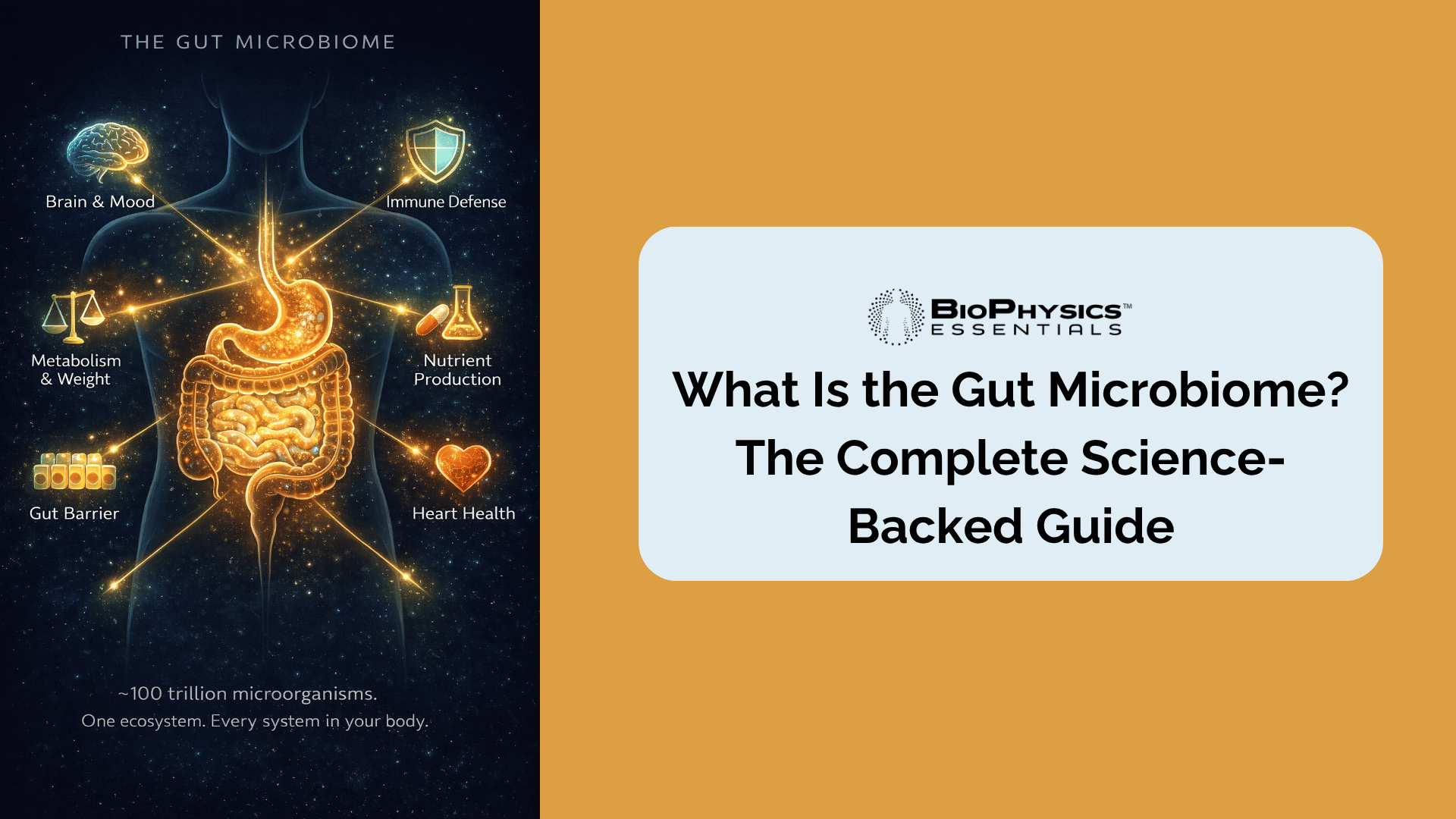
What Is the Gut Microbiome? The Complete Science-Backed Guide
The trillions of microbes living in your gut shape your digestion, immunity, mood, and more — here's the science behind why they matter.
Your gut is home to an ecosystem that weighs roughly as much as your brain, encodes over 150 times more genetic information than your human genome, and exerts influence over nearly every system in your body.[1] It is called the gut microbiome — and understanding what it is may be the single most important thing you can do for your long-term health.
In the past two decades, scientific interest in the gut microbiome has exploded. Over 150,000 peer-reviewed papers referencing "microbiome" have been published since the term was formally introduced in 2001, and the research continues to accelerate.[2] What researchers have uncovered is striking: the microbial community living in your intestines is not a passive bystander but an active co-regulator of digestion, immune function, brain chemistry, metabolism, and disease risk.
This guide is designed to be your foundational reference — the place to start before diving into any of the more specific topics covered across this blog. Whether you've arrived here wondering about gut dysbiosis, the gut-brain axis, or simply which probiotic strains are most relevant to your health, everything traces back to this one foundational concept.
Key Takeaways
- The gut microbiome is the collection of trillions of microorganisms — bacteria, fungi, viruses, and archaea — that inhabit your gastrointestinal tract, along with their genes and metabolic products.[3]
- Firmicutes and Bacteroidetes dominate the healthy gut, but diversity across hundreds of species is the real marker of a robust microbiome.[4]
- Short-chain fatty acids (SCFAs) like butyrate are among the most important metabolites your gut bacteria produce — fueling colonocytes, fortifying the gut barrier, and modulating systemic inflammation.[5]
- Roughly 90% of the body's serotonin is produced in the gut, and your microbiome plays a direct role in regulating neurotransmitter synthesis via the gut-brain axis.[6]
- Dysbiosis — microbial imbalance — has been associated with IBD, obesity, type 2 diabetes, anxiety, depression, and a growing list of chronic conditions.[7]
- Diet is the most powerful modifiable lever for shaping your microbiome composition, and multi-strain probiotics with prebiotic support can meaningfully restore disrupted microbial communities.[8]
What Is the Gut Microbiome?
The gut microbiome is the collective assembly of microbial communities — bacteria, fungi, viruses, archaea, and other microorganisms — inhabiting your gastrointestinal tract, together with their genes and the metabolic products they produce.[3] While the terms "microbiota" and "microbiome" are often used interchangeably in popular writing, they technically refer to slightly different things: microbiota describes the living organisms themselves, while microbiome encompasses both those organisms and their broader ecological context, including their genes and metabolites.[1]
The scale is difficult to fully appreciate. A healthy adult gut harbors somewhere in the range of 1014 microorganisms — a number comparable to, or even exceeding, the number of human cells in the body.[2] The vast majority reside in the large intestine (colon), where conditions favor dense microbial colonization. Earlier sections of the GI tract — the stomach and small intestine — contain far fewer microbes due to low pH and rapid transit time.

The Main Players: Which Bacteria Live in Your Gut?
While hundreds of bacterial species call the human gut home, two phyla dominate in healthy adults: Firmicutes and Bacteroidetes, which together account for roughly 90% of the gut bacterial population.[4] Other phyla present in smaller but still significant amounts include Actinobacteria (home to the important Bifidobacterium genus), Proteobacteria, and Verrucomicrobia. Beyond bacteria, the gut microbiome also includes:
- Fungi — including Candida species, which coexist peacefully in a balanced microbiome but can overgrow during dysbiosis (learn more: probiotics for Candida overgrowth)
- Viruses — primarily bacteriophages (viruses that infect bacteria), which help regulate bacterial populations
- Archaea — ancient single-celled organisms involved in methane production and fermentation
- Protozoa — mostly present in smaller populations with less well-characterized roles
Why Your Microbiome Is Uniquely Yours
No two people share an identical gut microbiome — not even identical twins. Research has shown that while genetics influences microbiome composition to some degree, environmental factors including diet, lifestyle, geographic location, medications, and early-life experiences account for far more of the variation between individuals.[7] This individuality is why personalized approaches to gut health — rather than one-size-fits-all solutions — are increasingly emphasized in the scientific literature.
The gut microbiome is sometimes described as a "forgotten organ" or a "virtual organ," a framing that reflects how indispensable this microbial community has turned out to be for normal human physiology.[1] Unlike other organs, however, it is far more malleable — shaped continuously by what you eat, how you sleep, your stress levels, and the medications you take.
What Does the Gut Microbiome Do?
The gut microbiome is not merely a collection of hitchhikers. It is an active metabolic and immune partner, performing essential functions that your own cells simply cannot accomplish alone. Researchers have identified four broad categories of function.
1. Digestion and Nutrient Production

Many of the complex carbohydrates and dietary fibers you consume — plant cell walls, resistant starches, inulin, pectin — pass through your stomach and small intestine largely untouched by human digestive enzymes. Your gut bacteria complete the job via fermentation, breaking these substrates down into compounds your body can use.[9] The most important of these fermentation products are short-chain fatty acids (SCFAs) — primarily acetate, propionate, and butyrate.
Butyrate deserves particular attention. It serves as the primary fuel source for colonocytes (the cells lining your colon), accounting for up to 70–90% of their energy needs.[5] It reinforces tight junction proteins in the intestinal barrier, stimulates mucin production, and exerts potent anti-inflammatory effects by inhibiting the NF-κB signaling pathway — the master regulator of inflammatory responses. For a deep dive into how to support SCFA production, see our guide on how to increase butyrate and SCFAs naturally.
Beyond SCFAs, gut bacteria also synthesize essential vitamins — including vitamin K2, folate, and several B vitamins — that the human body cannot produce on its own.[8]
2. Immune System Education and Defense
Approximately 70–80% of the body's immune tissue is located in and around the gastrointestinal tract — a striking statistic that reflects the gut microbiome's central role in immune education.[4] From the earliest days of life, gut bacteria interact with immune cells to help them distinguish between harmful pathogens and harmless dietary antigens, establishing a baseline of tolerance that prevents overreaction.
SCFAs play a direct role here as well. Butyrate and propionate promote the differentiation of regulatory T cells (Tregs), which suppress excessive immune responses and help prevent autoimmune conditions.[10] The gut microbiome also provides colonization resistance — the ability to outcompete and exclude pathogens simply through competitive occupation of gut niches and production of antimicrobial compounds. For more on this mechanism, see our article on the antimicrobial effects of probiotics.
Disruption of this immune education early in life — through antibiotic use, cesarean delivery, or formula feeding — has been associated with increased rates of allergic disease, asthma, and autoimmune conditions in childhood and beyond.[11]
3. Gut Barrier Integrity
The single-cell layer lining your intestines serves as the critical boundary between your gut contents and your bloodstream. When this barrier is compromised — often called "leaky gut" or increased intestinal permeability — bacterial toxins like lipopolysaccharide (LPS) can enter systemic circulation and trigger low-grade systemic inflammation linked to metabolic disease, neurological conditions, and more.[7]
Mucosa-binding bacteria, particularly species from the Lactobacillus and Bifidobacterium genera, play a frontline role in maintaining barrier integrity by colonizing the mucus layer and producing compounds that upregulate tight junction proteins. Our article on mucosa-binding gut bacteria explores this mechanism in detail. For those dealing with active barrier dysfunction, our evidence-based guide to probiotics for leaky gut repair covers the best-studied strains.
4. Metabolism and Weight Regulation
The composition of your gut microbiome influences how efficiently you extract calories from food, how your body manages fat storage, and how sensitive your cells are to insulin.[7] Research has documented differences in microbiome composition between lean and obese individuals, with obese individuals tending to show an altered Firmicutes-to-Bacteroidetes ratio and reduced microbial diversity overall. The gut microbiome's influence on appetite-regulating hormones like GLP-1 and PYY — partly mediated through SCFA signaling — provides one mechanistic pathway for this relationship.[5]
For those specifically interested in the evidence on weight management, our articles on probiotics for belly fat and probiotics for metabolism examine the clinical data on specific strains.
| Gut Microbiome Function | Key Mechanism | Relevant Probiotic Genera |
|---|---|---|
| Fiber fermentation & SCFA production | Bacterial fermentation of dietary fiber → acetate, propionate, butyrate | Lactobacillus, Bifidobacterium, Pediococcus |
| Immune education | Treg differentiation, IgA production, colonization resistance | Lactobacillus, Bifidobacterium, Streptococcus |
| Gut barrier integrity | Tight junction upregulation, mucin production, mucosal adhesion | Lactobacillus, Bifidobacterium, Bacillus |
| Neurotransmitter synthesis | Serotonin precursor metabolism, GABA production, vagal signaling | Lactobacillus, Bifidobacterium |
| Metabolic regulation | GLP-1/PYY secretion, insulin sensitivity, lipid metabolism | Lactobacillus gasseri, L. rhamnosus, B. lactis |
MicroBiome Restore: 26 Strains, Zero Fillers
Every bacterial genus discussed in this article — Lactobacillus, Bifidobacterium, Pediococcus, Streptococcus, and Bacillus — is represented in MicroBiome Restore's 26-strain formula. Paired with 7 certified organic whole-food prebiotics and delivered in a filler-free pullulan capsule.
The Gut-Brain Axis: Your Gut's Second Brain

If one area of gut microbiome research has captured public imagination most dramatically, it is the gut-brain axis — the bidirectional communication network linking your gut and your central nervous system (CNS). The connection operates through multiple overlapping pathways: the vagus nerve, the enteric nervous system (ENS), the immune system, the HPA (hypothalamic-pituitary-adrenal) axis, and the circulation of microbial metabolites.[12]
The vagus nerve serves as the primary anatomical highway. Running from the brainstem to the abdomen, it transmits signals in both directions — with roughly 80% of fibers carrying information from gut to brain, not the other way around.[13] Gut bacteria influence vagal activity by modulating the enteroendocrine cells lining the gut wall, which release hormones and neurotransmitters (including serotonin) in response to bacterial metabolites like SCFAs.
90% of Serotonin Is Made in the Gut
The neurotransmitter most associated with mood and emotional wellbeing isn't primarily made in the brain — it's produced in the gut. Enterochromaffin cells in the intestinal lining synthesize roughly 90% of the body's serotonin, and gut bacteria directly regulate this process by influencing tryptophan availability and metabolism.[6] When gut microbiota dysbiosis reduces serotonin synthesis, it creates a downstream effect that researchers have linked to mood disorders including depression and anxiety. Bifidobacterium and Lactobacillus species also directly synthesize GABA — the brain's primary inhibitory neurotransmitter.[14]
The clinical implications of the gut-brain axis extend across a wide range of conditions. Imbalances in gut microbiota composition have been associated with autism spectrum disorder, anxiety, depression, Parkinson's disease, and Alzheimer's disease, among others.[12] The specific strains of Lactobacillus rhamnosus and Bifidobacterium longum have shown particular promise in clinical research involving stress and mood outcomes — which is why they are featured in our dedicated articles on probiotics for anxiety and the gut-brain axis and mental wellbeing. For the connection to sleep, see our research review on probiotics for sleep.
How the Gut Microbiome Develops — and What Can Disrupt It
The gut microbiome is not static. It develops over a lifetime, with the most consequential period occurring in the first three to five years of life — a window during which foundational microbial communities are established and the immune system learns to co-exist with them.[11]
Establishment in Early Life
The fetal gut is largely sterile before birth. Initial colonization begins at delivery, when the infant is exposed to the mother's vaginal and fecal microbiota during vaginal birth, or to environmental and skin microbiota during cesarean delivery — an important distinction, as C-section-delivered infants show altered microbial profiles in the critical early months.[15] Breastfeeding further shapes the infant microbiome, providing both bacteria (via the entero-mammary pathway) and human milk oligosaccharides (HMOs) that selectively feed beneficial Bifidobacterium species. By the time a child reaches three to five years old, their microbiome has converged toward an adult-like composition that tends to remain relatively stable — barring significant disruptions.

Key Factors That Influence Your Microbiome Throughout Life
Once established, your gut microbiome continues to be shaped by a complex interplay of factors:
- Diet — The most powerful lever for microbiome modulation. Fiber-rich diets high in diverse plant foods support high microbial diversity and SCFA production; ultra-processed, low-fiber diets do the opposite.[16]
- Antibiotics — Broad-spectrum antibiotics reduce both phylogenetic diversity and the abundance of beneficial bacteria, with the potential for lasting effects that may persist for years after a course of treatment.[17] For strain-specific guidance on recovery, see our article on probiotics after antibiotics.
- Stress — Chronic psychological stress alters gut motility, mucosal permeability, and microbial composition via the HPA axis and its effects on gut physiology.[12]
- Sleep — Disrupted circadian rhythms and poor sleep quality are associated with reduced microbial diversity.[8]
- Other medications — Proton pump inhibitors (PPIs), metformin, statins, and laxatives are among the non-antibiotic drug classes most consistently associated with microbiome modification.[2]
- Geographic and socioeconomic factors — Populations in industrialized nations consistently show lower microbial diversity than those in less-industrialized settings, a pattern researchers attribute to diet, sanitation, and antibiotic exposure patterns.[4]
What Is Dysbiosis — and Which Conditions Is It Linked To?
Dysbiosis refers to a disruption of the normal, balanced composition of the gut microbiome — typically characterized by a loss of beneficial species, an overgrowth of potentially harmful organisms (pathobionts), and a reduction in overall microbial diversity.[7] The consequences are not confined to the gut. Because the microbiome communicates with so many organ systems, imbalance in the gut tends to have ripple effects throughout the body.

Conditions Associated With Gut Dysbiosis
The list of conditions linked to dysbiosis has expanded considerably as research has progressed:
Important Note on Causation vs. Correlation
Most human microbiome research to date is observational — it identifies associations between dysbiosis and disease, but establishing direct causation in humans remains an active area of investigation. The relationships below represent robust associations supported by multiple lines of evidence, but the field continues to evolve.
- Inflammatory Bowel Disease (IBD) and IBS — Patients with Crohn's disease and ulcerative colitis consistently show reduced microbial diversity and specific shifts in community composition. See our clinical reviews on probiotics for IBD and probiotics for IBS.
- Obesity and metabolic syndrome — Altered Firmicutes/Bacteroidetes ratios and reduced diversity are among the most replicated microbiome findings in obese individuals. Read more on probiotics for metabolism.
- Type 2 diabetes — Dysbiosis impairs insulin sensitivity and glucose metabolism through multiple SCFA-mediated and inflammatory pathways. Full clinical evidence: probiotics for type 2 diabetes.
- Anxiety and depression — Altered gut-brain axis signaling, reduced SCFA production, and disrupted tryptophan metabolism all connect dysbiosis to mood disorders. See our review: improving gut health for mental wellbeing.
- Small intestinal bacterial overgrowth (SIBO) — An excess of bacteria in the small intestine, often driven by disrupted microbiome dynamics. Covered in detail: probiotics for SIBO.
- Skin conditions — The gut-skin axis connects microbiome imbalance to eczema, rosacea, psoriasis, and acne. See: probiotics for skin health and probiotics for eczema.
- Histamine intolerance — Dysbiosis involving histamine-producing bacteria can overwhelm the gut's capacity to break down dietary histamine. Detailed review: probiotics for histamine intolerance.
For a comprehensive overview of what dysbiosis looks and feels like, see our guide on probiotics for gut dysbiosis, and for the signs your gut is signaling for support, our article on 12 signs your gut needs probiotics is a useful self-assessment.
How to Support a Healthy Gut Microbiome
Given how much your microbiome influences, maintaining its health is one of the highest-leverage investments you can make in your long-term wellbeing. The research points to several consistent strategies.
1. Prioritize Dietary Diversity and Fiber
Diet is the dominant force shaping gut microbiome composition, and fiber is its most important variable. Dietary fiber reaches the colon undigested, where it serves as the substrate for SCFA-producing fermentation. Populations eating over 30 different plant foods per week show significantly higher microbial diversity than those eating fewer.[16] Different types of fiber feed different microbial populations, which is why diversity matters — not just quantity. Polyphenol-rich foods (berries, olive oil, dark chocolate, green tea) also act as prebiotics by selectively promoting beneficial bacterial growth.
2. Add Prebiotic-Rich Foods and Supplements
Prebiotics are non-digestible food components that selectively stimulate the growth and activity of beneficial gut bacteria. The most studied include inulin (concentrated in Jerusalem artichoke and chicory root), acacia fiber, beta-glucans, and various oligosaccharides. For an evidence-based breakdown of prebiotic options, our articles on natural sources of prebiotics, Jerusalem artichoke's inulin content, and acacia fiber health benefits provide comprehensive guidance.
3. Use Multi-Strain Probiotics Strategically
Probiotics — live microorganisms that confer a health benefit when administered in adequate amounts — are the most direct tool for influencing gut microbiome composition. The clinical evidence is clearest when strain-specific interventions are matched to specific health outcomes. Key considerations include:
- Multi-strain formulas offer broader coverage than single-strain products, supporting diverse bacterial communities rather than artificially amplifying one species. See our review: single vs. multi-strain probiotics.
- CFU count matters — but only up to a point. Most clinically validated doses fall in the 1–15 billion CFU range, with the strain composition and formulation quality often mattering more than raw CFU numbers alone.
- Fillers can undermine efficacy. Microcrystalline cellulose (MCC), magnesium stearate, and titanium dioxide are common additives in commodity probiotics that may compromise gut health. Learn how to identify them: how to read probiotic labels for hidden fillers.
What to Look For in a Probiotic Supplement
Based on the science reviewed above, a well-designed probiotic should include multiple Lactobacillus and Bifidobacterium strains (plus spore-forming Bacillus species for stability), a meaningful CFU count, whole-food prebiotic support, and a clean formulation free of synthetic flow agents and fillers. MicroBiome Restore was formulated around exactly these criteria — 26 strains across 6 genera, 15 billion CFU, 7 certified organic whole-food prebiotics including Jerusalem artichoke, maitake mushroom, fig fruit, acacia, bladderwrack, Norwegian kelp, and oarweed, in a filler-free pullulan capsule.

4. Protect Sleep and Manage Stress
The gut-brain axis runs in both directions: just as the gut influences brain function, chronic stress and sleep disruption measurably alter microbiome composition. Prioritizing sleep quality and stress management is not soft advice — it is mechanistically backed by research showing that the HPA axis directly modulates gut physiology and microbial community dynamics.[12]
5. Be Mindful With Antibiotics
Antibiotic therapy can be life-saving and is sometimes unavoidable — but it is also the single most disruptive pharmaceutical intervention for the gut microbiome, capable of reducing diversity and eliminating beneficial species with effects that can persist for months to years.[17] When antibiotics are necessary, pairing them with targeted probiotic supplementation to accelerate microbiome recovery is well-supported by the evidence. Our guide on probiotics after antibiotics covers the best-studied strains for this purpose.
For a broader set of actionable habits to build a resilient gut, our articles on 8 ways to boost gut health naturally and essential gut health habits offer practical frameworks grounded in the same research.
Frequently Asked Questions
How do I tell if my gut microbiome is healthy?
There is no universal definition of a "healthy" microbiome because microbial composition is highly individual. That said, consistent markers of a well-functioning gut include regular, comfortable bowel movements; absence of chronic bloating, gas, or abdominal pain; stable mood and energy; and resilience to illness. At-home microbiome testing can provide a compositional snapshot — our guide to interpreting gut microbiome test results explains what those numbers actually mean. Symptom-based clues are covered in our article on 12 common gut health symptoms.
Does gut microbiome affect Alzheimer's disease?
Emerging research suggests a meaningful connection. Studies have documented differences in gut microbiome composition between Alzheimer's patients and healthy controls, and the gut-brain axis provides plausible mechanistic pathways through which microbial dysbiosis could influence neuroinflammation, amyloid aggregation, and cognitive function.[12] This is an active area of investigation; the research is not yet mature enough to make clinical recommendations, but the gut-brain axis framework gives it biological credibility.
What are the "super six" gut foods?
Tim Spector's "super six" refers to six categories of plant foods associated with microbiome diversity in large-scale observational data: vegetables, fruits, whole grains, legumes, nuts and seeds, and herbs and spices. The common thread is plant diversity — consuming a wide variety of whole plant foods provides diverse fiber types and polyphenols that feed different microbial populations. Our guide to natural prebiotic food sources offers a research-backed perspective on which specific foods most consistently support beneficial bacteria.
How quickly can I change my gut microbiome?
Diet-induced changes to microbiome composition can occur within 24–48 hours of a significant dietary shift — though these rapid changes are often transient. Meaningful, sustained changes in the resident microbial community typically require weeks of consistent dietary and lifestyle intervention. Probiotic supplementation produces transient increases in targeted species during supplementation, with persistence dependent on diet and the pre-existing microbial environment. See our detailed timeline: how long do probiotics take to work?
What is the difference between probiotics, prebiotics, and synbiotics?
Probiotics are live microorganisms that confer health benefits when consumed in adequate amounts. Prebiotics are non-digestible food components (typically fibers) that selectively feed beneficial bacteria. Synbiotics combine both in a single formulation, with the prebiotic component specifically chosen to support the probiotic strains included. For a full explainer, see our article on what prebiotics, probiotics, and synbiotics mean.
Your Microbiome Deserves a Formula Built Around the Science
MicroBiome Restore delivers 26 clinically studied probiotic strains — spanning Lactobacillus, Bifidobacterium, Pediococcus, Streptococcus thermophilus, Enterococcus faecium, and 6 Bacillus species — with 7 certified organic whole-food prebiotics and 80+ trace minerals. No MCC. No magnesium stearate. No titanium dioxide. Just the formula the science points to.
References
- Hou, K., Wu, Z. X., Chen, X. Y., Wang, J. Q., Zhang, D., Xiao, C., Zhu, D., Koya, J. B., Wei, L., Li, J., & Chen, Z. S. (2022). Microbiota in health and diseases. Signal Transduction and Targeted Therapy, 7(1), 135. https://doi.org/10.1038/s41392-022-00974-4
- Salvadori, M., & Rosso, G. (2024). Update on the gut microbiome in health and diseases. World Journal of Methodology, 14(1), 89196. https://doi.org/10.5662/wjm.v14.i1.89196
- Chen, Z., Wen, X., Jiang, Y., & Li, H. (2026). Composition and function of gut microbiome: From basic omics to precision medicine. Genes, 17(1), 116. https://doi.org/10.3390/genes17010116
- Ahmad, A., & Farhan Asad, S. (2022). Human gut microbiota in health and disease: Unveiling the relationship. Frontiers in Microbiology, 13, 999001. https://doi.org/10.3389/fmicb.2022.999001
- Moreira-Rosário, A., Marques, C., Pinheiro, H., Araújo, J. R., Ribeiro, P., Pita, A., & Faria, A. (2024). The interplay between gut microbiota, short-chain fatty acids, and implications for host health and disease. Frontiers in Microbiology. PMC11407412. https://pmc.ncbi.nlm.nih.gov/articles/PMC11407412/
- Xiong, R. G., Li, J., Cheng, J., Zhou, D. D., Wu, S. X., Huang, S. Y., Saimaiti, A., Yang, Z. J., Gan, R. Y., & Li, H. B. (2023). The role of gut microbiota in anxiety, depression, and other mental disorders as well as the protective effects of dietary components. Nutrients, 15(14), 3258. PMC12289773. https://pmc.ncbi.nlm.nih.gov/articles/PMC12289773/
- Cani, P. D., & Jordan, B. F. (2022). Role of gut microbiota in health, disease, and obesity. Foods, 14(3), 492. https://doi.org/10.3390/foods14030492
- Portincasa, P., Bonfrate, L., Vacca, M., De Angelis, M., Farella, I., Lanza, E., Khalil, M., Wang, D. Q., Sperandio, M., & Di Ciaula, A. (2022). Gut microbiota and short chain fatty acids: Implications in glucose homeostasis. International Journal of Molecular Sciences, 23(3), 1105. PMC11315840. https://pmc.ncbi.nlm.nih.gov/articles/PMC11315840/
- Morrison, D. J., & Preston, T. (2016). Formation of short chain fatty acids by the gut microbiota and their impact on human metabolism. Gut Microbes, 7(3), 189–200. https://pmc.ncbi.nlm.nih.gov/articles/PMC4939913/
- Tan, J., McKenzie, C., Vuillermin, P. J., Goverse, G., Vinuesa, C. G., Mebius, R. E., Macia, L., & Mackay, C. R. (2023). Complex regulatory effects of gut microbial short-chain fatty acids on immune tolerance and autoimmunity. Cellular & Molecular Immunology, 20, 341–350. https://doi.org/10.1038/s41423-023-00987-1
- Di Profio, E., Magenes, V. C., Fiore, G., Agostinelli, M., La Mendola, A., Meneghin, F., Sculati, M., & Zuccotti, G. (2025). Early-life gut microbiome development and its potential long-term impact on health outcomes. Microbiome Research Reports. PMC12367470. https://pmc.ncbi.nlm.nih.gov/articles/PMC12367470/
- Cryan, J. F., O'Riordan, K. J., Cowan, C. S. M., Sandhu, K. V., Bastiaanssen, T. F. S., Boehme, M., Codagnone, M. G., Cussotto, S., Fulling, C., Golubeva, A. V., Guzzetta, K. E., Jaggar, M., Long-Smith, C. M., Lyte, J. M., Martin, J. A., Molinero-Perez, A., Moloney, G., Morelli, E., Morillas, E., … Dinan, T. G. (2019). The microbiota-gut-brain axis. Physiological Reviews, 99(4), 1877–2013. https://doi.org/10.1152/physrev.00018.2018
- Jang, Y., Kim, M., & Hwang, S. W. (2022). Vagus nerve and underlying impact on the gut microbiota-brain axis in behavior and neurodegenerative diseases. Journal of Inflammation Research, 15, 6337–6360. PMC9656367. https://pmc.ncbi.nlm.nih.gov/articles/PMC9656367/
- Wang, H., Lee, I. S., Braun, C., & Enck, P. (2025). Gut microbiota: A new challenge in mood disorder research. Nutrients, 17(8). PMC12028401. https://pmc.ncbi.nlm.nih.gov/articles/PMC12028401/
- Suárez-Martínez, C., Santaella-Pascual, M., Yagüe-Guirao, G., & Martínez-Graciá, C. (2023). Infant gut microbiota colonization: Influence of prenatal and postnatal factors, focusing on diet. Frontiers in Microbiology, 14, 1236030. PMC10478010. https://pmc.ncbi.nlm.nih.gov/articles/PMC10478010/
- Dahl, W. J., & Rivero Mendoza, D. (2024). Diet's impact on gut microbial assemblage in health and disease. Frontiers in Nutrition. PMC12126223. https://pmc.ncbi.nlm.nih.gov/articles/PMC12126223/
- Fishbein, S. R. S., Mahmud, B., & Dantas, G. (2023). Antibiotic perturbations to the gut microbiome. Nature Reviews Microbiology, 21(12), 772–788. PMC12087466. https://doi.org/10.1038/s41579-023-00933-y


'%3e%3cg%20id='Final-Copy-2_2_'%20transform='translate(1275.000000,%20200.000000)'%3e%3cpath%20class='st0'%20d='M7.4,12.8h6.8l3.1-11.6H7.4C4.2,1.2,1.6,3.8,1.6,7S4.2,12.8,7.4,12.8z'/%3e%3c/g%3e%3c/g%3e%3c/g%3e%3cg%20id='final---dec.11-2020'%3e%3cg%20id='_x30_208-our-toggle'%20transform='translate(-1275.000000,%20-200.000000)'%3e%3cg%20id='Final-Copy-2'%20transform='translate(1275.000000,%20200.000000)'%3e%3cpath%20class='st1'%20d='M22.6,0H7.4c-3.9,0-7,3.1-7,7s3.1,7,7,7h15.2c3.9,0,7-3.1,7-7S26.4,0,22.6,0z%20M1.6,7c0-3.2,2.6-5.8,5.8-5.8%20h9.9l-3.1,11.6H7.4C4.2,12.8,1.6,10.2,1.6,7z'/%3e%3cpath%20id='x'%20class='st2'%20d='M24.6,4c0.2,0.2,0.2,0.6,0,0.8l0,0L22.5,7l2.2,2.2c0.2,0.2,0.2,0.6,0,0.8c-0.2,0.2-0.6,0.2-0.8,0%20l0,0l-2.2-2.2L19.5,10c-0.2,0.2-0.6,0.2-0.8,0c-0.2-0.2-0.2-0.6,0-0.8l0,0L20.8,7l-2.2-2.2c-0.2-0.2-0.2-0.6,0-0.8%20c0.2-0.2,0.6-0.2,0.8,0l0,0l2.2,2.2L23.8,4C24,3.8,24.4,3.8,24.6,4z'/%3e%3cpath%20id='y'%20class='st3'%20d='M12.7,4.1c0.2,0.2,0.3,0.6,0.1,0.8l0,0L8.6,9.8C8.5,9.9,8.4,10,8.3,10c-0.2,0.1-0.5,0.1-0.7-0.1l0,0%20L5.4,7.7c-0.2-0.2-0.2-0.6,0-0.8c0.2-0.2,0.6-0.2,0.8,0l0,0L8,8.6l3.8-4.5C12,3.9,12.4,3.9,12.7,4.1z'/%3e%3c/g%3e%3c/g%3e%3c/g%3e%3c/g%3e%3c/svg%3e) Your Privacy Choices
Your Privacy Choices
Share and get 15% off!
Simply share this product on one of the following social networks and you will unlock 15% off!