Jerusalem Artichoke: Nature's Richest Inulin Source for Probiotic Growth
person
Nicholas Wunder
calendar_today
comment
0 comments
Jerusalem Artichoke: Nature's Richest Inulin Source for Probiotic Growth
How this humble tuber delivers more prebiotic fiber than any other vegetable—and why your gut microbiota thrives on it
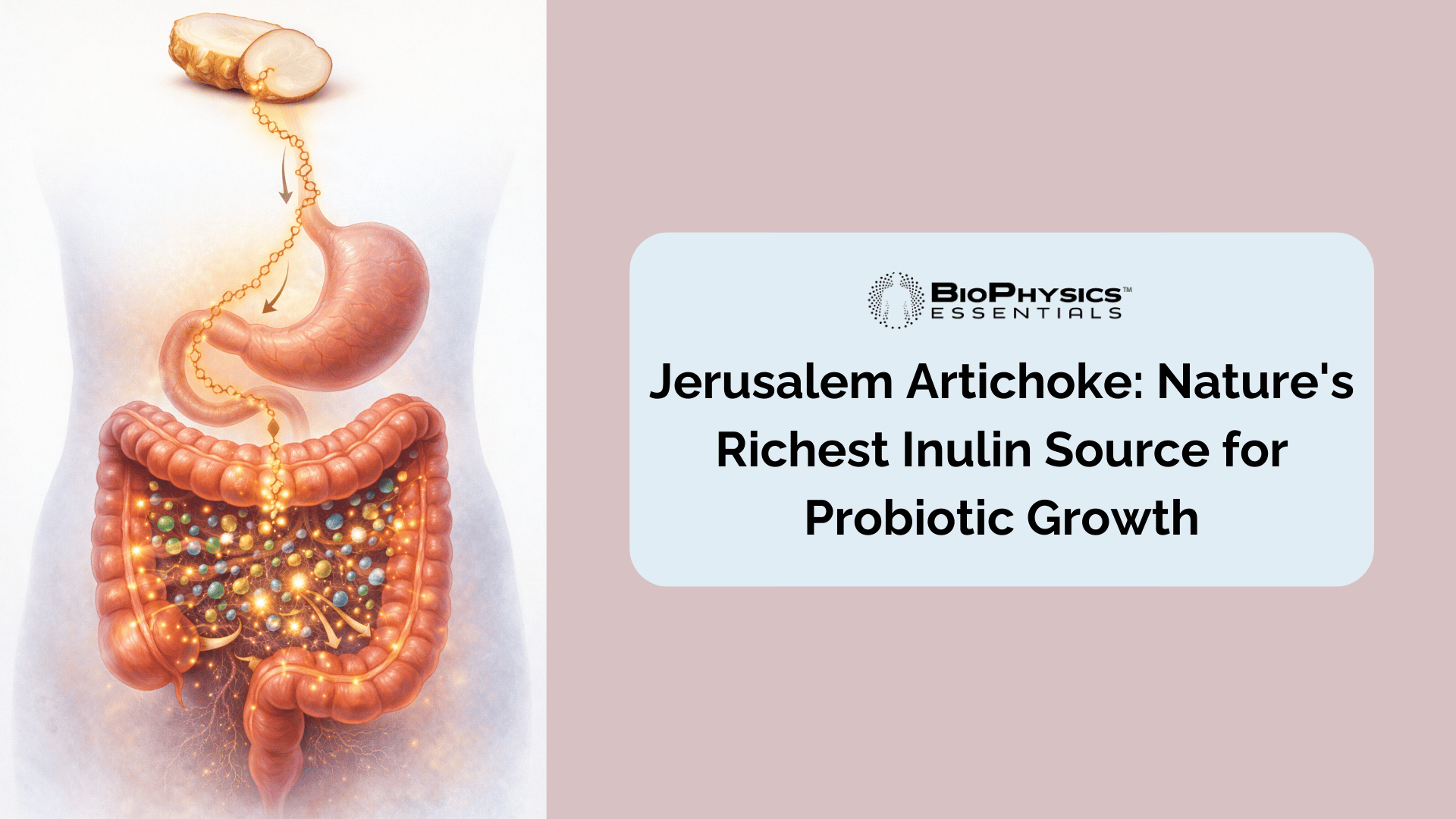
Among the many natural prebiotics available today, Jerusalem artichoke stands in a class of its own. While chicory root fiber gets most of the commercial attention, this knobby tuber—also called sunchoke—actually contains higher concentrations of inulin, the soluble fiber that feeds beneficial bacteria throughout the digestive system. With 10-22% inulin by fresh weight, Jerusalem artichoke delivers more gut-nourishing fructans per serving than virtually any other whole-food fiber source.[1]
But here's what makes this especially relevant for anyone taking a multi-strain probiotic: research shows that Jerusalem artichoke inulin specifically enhances the growth of probiotic bacteria in the Bifidobacterium and Lactobacillus genera. Clinical trials demonstrate that consuming this prebiotic dietary fiber increases bifidobacteria populations while boosting short-chain fatty acid production, creating an intestinal environment where probiotic bacteria can truly thrive.[2]
This guide explores what makes Jerusalem artichoke such an exceptional prebiotic fiber, which probiotic strains benefit most, and how understanding the science behind prebiotics and probiotics working together can help you maximize gut health results.
Key Takeaways
Jerusalem artichoke contains 10-22% inulin by fresh weight—the highest concentration of any common food source, making it nature's premier natural prebiotic for feeding beneficial gut microbiota.[1]
Human clinical trials confirm that Jerusalem artichoke inulin significantly increases Bifidobacterium populations in the intestinal microbiota and reduces harmful bacteria ratios in just 2-3 weeks.[2]
Bifidobacterium bifidum growth improved significantly when cultured with Jerusalem artichoke fructans—even outperforming commercial chicory root fiber and HP inulin in comparisons.[3]
Multiple Lactobacillus species including L. plantarum, L. acidophilus, L. rhamnosus, and L. reuteri demonstrate enhanced growth and gastrointestinal survival with prebiotic inulin.[4]
Bacterial fermentation of inulin increases short-chain fatty acid production—particularly butyrate—which fuels colon cells and creates optimal conditions for probiotic colonization in the large intestine.[5]
Synbiotic combinations (probiotic bacteria + prebiotics) show superior results compared to either alone, with Jerusalem artichoke inulin being especially effective at enhancing persistence in the gut microbiome.[6]
What Is Jerusalem Artichoke?
Despite its name, Jerusalem artichoke (Helianthus tuberosus) has no connection to Jerusalem and isn't an artichoke. This herbaceous perennial belongs to the sunflower family (Asteraceae) and is native to eastern North America. The "artichoke" likely derives from the Italian word girasole (sunflower), which English speakers corrupted into "Jerusalem."[7]
The edible portion is an underground tuber—knobby, irregularly shaped, and ranging from pale tan to reddish-brown. Unlike potatoes, which store energy as starch, Jerusalem artichokes store carbohydrates almost entirely as inulin-type fructans. This fundamental difference is what makes them so valuable as a natural prebiotic food that supports healthy gut microbiota.
Nutritional Profile Beyond Inulin
Jerusalem artichoke tubers contain approximately 80% water, with dry matter composed of: carbohydrates 10-22% (80-90% as fructans), protein 1-2%, dietary fiber 2-2.5%, and notably high potassium, iron, and calcium.[1] The tubers also contain caffeoylquinic acids—polyphenolic compounds with antioxidant properties that may contribute additional benefits beyond prebiotic effects on the intestinal microbiota.
Inulin Content: How Jerusalem Artichoke Compares to Other Natural Prebiotics
When it comes to natural prebiotic sources of soluble fiber, Jerusalem artichoke consistently ranks at or near the top. While commercial inulin production has focused on chicory root fiber due to agricultural infrastructure, Jerusalem artichoke actually offers comparable or higher fructan concentrations—making it one of the best whole-food fiber sources for supporting gut microbiota.
What distinguishes Jerusalem artichoke inulin isn't just concentration—it's also the degree of polymerization (DP). Jerusalem artichoke fructans range from short-chain fructooligosaccharides (FOS, DP 2-10) to longer-chain HP inulin (DP 10-35).[9] This mixture provides benefits across the entire large intestine, as different probiotic bacteria preferentially ferment fructans of different chain lengths.
Jerusalem Artichoke vs. Chicory Root Fiber
Both Jerusalem artichoke and chicory roots are excellent sources of inulin-type fructans. Chicory root fiber dominates the commercial market primarily due to established agricultural supply chains. However, laboratory studies comparing the two show comparable—and sometimes superior—prebiotic effects from Jerusalem artichoke fructans. The choice between chicory root fiber and Jerusalem artichoke often comes down to availability, with Jerusalem artichoke being the better option for those seeking natural prebiotics from whole-food fiber sources.
How Inulin Works as a Prebiotic in the Digestive System
Understanding why Jerusalem artichoke inulin is so effective requires understanding prebiotic mechanisms. Inulin consists of fructose molecules linked by β-(2,1) glycosidic bonds. Human digestive enzymes cannot break these bonds, which means this soluble fiber passes through the stomach and small intestine intact, arriving in the large intestine where it becomes available to beneficial gut microbiota.
Selective Bacterial Fermentation
Not all gut bacteria can utilize inulin. Only probiotic bacteria possessing specific enzymes—particularly β-fructosidases and inulinases—can hydrolyze inulin's fructan chains. Crucially, Bifidobacterium and certain Lactobacillus species possess these enzymes in abundance, while harmful bacteria like Escherichia coli do not.[10]
This selective bacterial fermentation is the essence of prebiotic action: by providing substrate that only probiotic bacteria can efficiently utilize, inulin shifts the competitive balance of the gut microbiome in favor of health-promoting species. Understanding the interplay between multi-strain probiotics and their prebiotic fuel sources helps explain why some supplements outperform others.
Inulin's real payoff happens downstream—when your bacteria ferment it into the compounds that stimulate GLP-1. See the full pathway in our guide to how prebiotic fiber supports your natural GLP-1.
Cross-Feeding Networks in the Gut Microbiome
The prebiotic effect extends beyond direct fermentation. When Bifidobacterium break down dietary fiber, they release intermediate products that secondary fermenters can utilize. This "cross-feeding" creates a cascade effect that benefits the broader gut microbiota community. Species like Faecalibacterium prausnitzii, a particularly important butyrate producer, benefit from this cross-feeding despite not directly fermenting inulin.[5]
Research Spotlight: The Bifidogenic Effect on Intestinal Microbiota
A landmark study by Kleessen et al. demonstrated that consuming Jerusalem artichoke inulin in bakery products increased fecal bifidobacteria counts by 1.2 log10 (approximately 15-fold) over 21 days. Simultaneously, potentially harmful Bacteroides/Prevotella and Clostridium histolyticum populations in the intestinal microbiota decreased significantly.[11]
Probiotic Bacteria That Benefit Most from Jerusalem Artichoke Inulin
Research has identified specific probiotic strains demonstrating enhanced growth, viability, and functionality when combined with inulin from Jerusalem artichoke. Understanding which probiotic bacteria benefit most helps optimize supplementation strategy.
Bifidobacterium Species
Bifidobacterium species are the most efficient inulin fermenters, possessing multiple genes for fructan metabolism.
Strain Spotlight: Bifidobacterium bifidum
Research findings:B. bifidum growth improved significantly when cultured with Jerusalem artichoke fructans—even outperforming commercial chicory root fiber or HP inulin at the same concentration.[3] This species possesses extracellular enzymes that hydrolyze longer-chain fructans, making it particularly effective at utilizing Jerusalem artichoke's diverse fructan profile through bacterial fermentation.
Bifidobacterium longum: Studies show increased relative abundance in the gut microbiome following inulin supplementation. These probiotic bacteria are particularly adept at fermenting shorter-chain fructooligosaccharides.[10] Learn more in our article on Bifidobacterium longum.
Bifidobacterium lactis: Multiple studies demonstrate that prebiotic inulin enhances growth and viability. One study found that adding 2% inulin to probiotic yogurt maintained B. lactis counts sufficient for clinical benefit throughout shelf life, demonstrating how natural prebiotics support probiotic bacteria viability.[12]
Lactobacillus Species
While Lactobacillus species generally ferment inulin less efficiently than Bifidobacterium, several important probiotic strains show significant benefits in terms of survival and metabolic activity in the digestive system.
Strain Spotlight: Lactobacillus plantarum
L. plantarum demonstrates substantially improved gastrointestinal survival when pre-grown with prebiotic inulin—better resistance to simulated gastric and pancreatic juices compared to glucose-cultured cells.[13] When grown with inulin, it produces approximately 30% more butyrate—the primary fuel for colon cells.
Lactobacillus acidophilus: Research shows enhanced growth and metabolic activity in prebiotic-supplemented media. In co-culture experiments, L. acidophilus maintained higher viable counts when soluble fiber from inulin was available.[4] Those experiencing digestive discomfort may explore signs of Lactobacillus deficiency.
Lactobacillus reuteri: Studies demonstrate that inulin enhances L. reuteri adhesion to intestinal cells and increases survival through simulated gastrointestinal transit in the digestive system.[15]
Lactobacillus casei and L. paracasei: Jerusalem artichoke-derived fructans enhance growth of L. casei, and synbiotic combinations containing these probiotic bacteria with prebiotic fiber show improved clinical outcomes.[16]
When probiotic bacteria ferment Jerusalem artichoke inulin, they produce short-chain fatty acids (SCFAs)—primarily acetate, propionate, and butyrate. These metabolites are critical signaling molecules that influence health throughout the body and support colon cells lining the digestive system.
Butyrate: Fuel for Colon Cells
Butyrate serves as the primary energy source for colonocytes—cells lining the large intestine. Without adequate butyrate from bacterial fermentation, these colon cells cannot maintain the healthy colonic barrier that prevents harmful substances from entering the bloodstream. Studies show Jerusalem artichoke consumption significantly increases fecal butyrate concentrations, supporting intestinal microbiota health and reducing colorectal cancer risk.[5]
Propionate and Acetate: Metabolic Benefits
Propionate influences glucose metabolism and regulates appetite through the gut-brain axis. Acetate enters systemic circulation and influences lipid metabolism, potentially supporting healthy LDL cholesterol levels. These short-chain fatty acids from prebiotic fiber fermentation support metabolic health beyond the digestive system.[5]
Creating an Optimal Environment for Probiotic Bacteria
Short-chain fatty acids create a positive feedback loop. The acidified colonic environment favors acid-tolerant species like Bifidobacterium and Lactobacillus while inhibiting pH-sensitive pathogens like Escherichia coli. Additionally, improved energy supply to colon cells strengthens the colonic barrier—conditions that support healthy intestinal microbiota communities.
Understanding how prebiotics and probiotic bacteria together support bloating relief through SCFA production provides actionable context.
Clinical Evidence in Humans
Laboratory studies demonstrate mechanisms, but human clinical trials confirm real-world effectiveness for the gut microbiome.
The Fruit and Vegetable Shot Study
A double-blind, placebo-controlled trial enrolled 66 healthy adults to test shots containing 5 grams daily of Jerusalem artichoke-derived inulin. Results showed:[2]
Significantly higher bifidobacteria levels in gut microbiota
Increased Lactobacillus/Enterococcus populations in intestinal microbiota
Greater than 90% compliance rates indicating good tolerability
The Bakery Product Trial
Kleessen et al. compared Jerusalem artichoke inulin and chicory root fiber in snack bars with 45 volunteers consuming 15.4g fructan/day for 21 days.[11] Both produced comparable effects: bifidobacteria increased by +1.2 log10, while harmful Bacteroides/Prevotella and Clostridium populations decreased. Heat treatment during baking did not eliminate the prebiotic effect on gut microbiota.
Implications for Probiotic Users
These clinical trials confirm: Jerusalem artichoke inulin creates an intestinal microbiota environment favoring the very probiotic bacteria most commonly included in supplements. Ensuring adequate prebiotic dietary fiber intake—from whole foods like Jerusalem artichoke or chicory root fiber—may enhance probiotic colonization and effectiveness.
Beyond Digestive Health: Additional Benefits
While prebiotic effects on gut microbiota are well-established, Jerusalem artichoke inulin offers benefits extending far beyond the digestive system through changes in intestinal microbiota and increased short-chain fatty acid production.
Blood Sugar and Diabetes Management
Jerusalem artichoke has a remarkably low glycemic index compared to other root vegetables. The inulin content slows glucose absorption, and clinical trials suggest that long-term administration of prebiotic inulin may improve insulin sensitivity and reduce insulin resistance through changes in gut microbiota composition.[20]
Enhanced Calcium Absorption
One of the most consistent findings in prebiotic research is that inulin-type fructans enhance calcium absorption in the large intestine. Short-chain fatty acids from bacterial fermentation lower colonic pH, increasing calcium solubility. Several clinical trials demonstrate improved calcium absorption and even increased bone mineral density with regular consumption of prebiotic dietary fiber.[21]
Cardiovascular Health and LDL Cholesterol
Research indicates that prebiotic soluble fiber may support cardiovascular health. Studies show modest reductions in LDL cholesterol and triglycerides following inulin supplementation, likely through effects on bile acid metabolism.[22]
Inflammatory Bowel Disease and Colonic Barrier Support
Butyrate from bacterial fermentation plays a crucial role in maintaining colonic barrier integrity—relevant for inflammatory bowel disease conditions like ulcerative colitis or Crohn's disease. While prebiotic fiber should be introduced cautiously during active flares, maintaining healthy intestinal microbiota through natural prebiotics may help support remission through anti-inflammatory effects on colon cells.[23]
Immune System Support
Approximately 70% of the body's immune system resides in the gut. Prebiotic fibers support immune system health by promoting probiotic bacteria that interact with gut-associated lymphoid tissue. Studies show increased secretory IgA production following prebiotic supplementation, demonstrating how supporting gut microbiome benefits systemic immunity.[19]
Colorectal Cancer Prevention
Butyrate from bacterial fermentation has demonstrated anti-cancer properties—promoting apoptosis in colorectal cancer cells while supporting healthy colon cells. Epidemiological studies associate high dietary fiber intake with reduced colorectal cancer risk, and prebiotic-driven changes in intestinal microbiota may contribute to this protective effect.[25]
Synbiotic Support: Prebiotics + Probiotics in One Formula
MicroBiome Restore combines 26 probiotic bacteria strains—including all species discussed in this article—with 9 organic prebiotic ingredients that feed beneficial gut microbiota. Our filler-free formula delivers 15 billion CFU per serving.
The concept of synbiotics—combining probiotic bacteria with natural prebiotics that specifically support their growth—represents cutting-edge gut health optimization. Research shows this combined approach outperforms either probiotics or prebiotic dietary fiber alone for supporting healthy intestinal microbiota.
Enhanced Persistence in the Gut Microbiome
A controlled study found that dietary inulin significantly increased intestinal survival of administered Lactobacillus plantarum. Rats receiving the synbiotic combination showed higher fecal counts in their intestinal microbiota compared to those receiving probiotic alone—associated with improved calcium absorption and other markers of gut microbiota health.[6]
Improved Clinical Outcomes
A human clinical trial using synbiotic combination of L. rhamnosus GG, L. acidophilus, L. paracasei, and Bifidobacterium animalis lactis BB-12 with chicory-derived HP inulin found significant increases in beneficial Bifidobacterium species in the gut microbiome after just 4 weeks.[18]
Why Synbiotic Formulation Matters
Not all synbiotic products are created equal. MicroBiome Restore is formulated with this science in mind, combining clinically relevant probiotic strains with natural prebiotics—including those functioning similarly to Jerusalem artichoke's fructans—in a prebiotic pullulan capsule that itself provides dietary fiber nutrition for beneficial gut microbiota.
The synbiotic approach extends beyond digestive system health. A study found that combining inulin-enriched prebiotics with L. rhamnosus GG and B. lactis Bb12 increased secretory IgA production—a marker of enhanced mucosal immunity—demonstrating how feeding probiotic bacteria with prebiotic fiber amplifies beneficial effects on intestinal microbiota.[19]
Incorporating Jerusalem Artichoke Inulin
Whole-Food Fiber Sources
Jerusalem artichokes can be eaten raw or cooked, representing one of the best whole-food fiber sources for prebiotic dietary fiber. Raw, they have a crisp, slightly sweet, nutty flavor. Cooking softens the texture. Traditional preparations include roasting, sautéing, and pureeing into soups—all methods preserving most inulin content.
Typical serving: A 100-gram serving provides approximately 10-22 grams of inulin—sufficient for prebiotic effects on intestinal microbiota based on clinical trials showing benefits at 5-15 grams daily of this soluble fiber.
Starting Slowly with Prebiotic Dietary Fiber
Rapid increases in inulin intake can cause temporary digestive discomfort as your gut microbiome adjusts to increased bacterial fermentation. Start with small portions (50 grams or less) and increase gradually over 1-2 weeks, allowing intestinal microbiota populations to adapt.
Supplemental Sources of Natural Prebiotics
Jerusalem artichoke-derived inulin is available as powder for smoothies or baked goods. Commercial inulin supplements—whether from Jerusalem artichoke or chicory root fiber—typically provide 2-10 grams per serving, within the effective range for gut microbiota health.
Many synbiotic formulations, including MicroBiome Restore, incorporate prebiotic fibers providing similar benefits. We use organic prebiotic sources such as organic acacia gum—chosen for its gentle fermentation profile—providing soluble fiber substrates that selectively feed beneficial intestinal microbiota.
Timing Considerations
Taking natural prebiotics alongside or shortly before probiotic bacteria ensures the prebiotic substrate arrives in the large intestine alongside supplemented bacteria, potentially enhancing colonization. For probiotic timing guidance, see our article on the best time to take probiotics.
Frequently Asked Questions
Is Jerusalem artichoke the same as globe artichoke?
No, they're completely different plants. Globe artichoke (Cynara scolymus) is eaten for its edible flower buds. Jerusalem artichoke (Helianthus tuberosus) is a sunflower relative grown for its tubers rich in prebiotic dietary fiber. While both contain inulin-type fructans supporting gut microbiota, Jerusalem artichoke has significantly higher concentrations.
How much Jerusalem artichoke should I eat for prebiotic benefits?
Clinical trials used 5-15 grams of inulin daily. Since Jerusalem artichoke contains 10-22% inulin, approximately 50-150 grams (2-5 ounces) would provide this soluble fiber amount. Start with 50 grams and increase gradually to minimize digestive system discomfort as probiotic bacteria populations adapt to increased bacterial fermentation.
Can I take Jerusalem artichoke inulin with probiotic supplements?
Yes—research suggests this synbiotic approach may be more effective than either alone for supporting healthy intestinal microbiota. The prebiotic dietary fiber provides substrate for supplemented probiotic bacteria, enhancing their survival and colonization in the gut microbiome.
Why does Jerusalem artichoke cause gas?
Gas production indicates the prebiotic is working. When gut microbiota ferment inulin through bacterial fermentation, they produce gases along with beneficial short-chain fatty acids. Gas production typically decreases as your gut microbiome adapts over 1-2 weeks of regular consumption.
How does Jerusalem artichoke compare to chicory root fiber?
Human clinical trials found comparable prebiotic effects between Jerusalem artichoke and chicory root fiber on the gut microbiome. Both significantly increase Bifidobacterium populations and produce beneficial short-chain fatty acids. Some research suggests Jerusalem artichoke may have slight advantages compared to chicory root fiber or HP inulin for certain strains, but both are effective natural prebiotics.
For nursing mothers, Jerusalem artichoke-derived inulin offers dual value: it supports maternal gut diversity while potentially enhancing the bacterial populations that are transferred to breast milk during lactation.
Does cooking destroy inulin in Jerusalem artichoke?
Inulin is relatively heat-stable. Research found prebiotic effects on gut microbiota were maintained despite heat treatment during baking. For maximum inulin retention, gentler cooking methods or raw consumption are preferable, but even cooked Jerusalem artichoke remains an excellent source of prebiotic dietary fiber.
Can Jerusalem artichoke help with inflammatory bowel disease?
Short-chain fatty acids from bacterial fermentation—particularly butyrate—support colon cell health and colonic barrier integrity, relevant for inflammatory bowel disease like ulcerative colitis and Crohn's disease. Introduce high-fiber foods cautiously during active flares, but during remission, natural prebiotics supporting intestinal microbiota may help maintain gut microbiome health. Consult your healthcare provider regarding dietary fiber changes.
Feeding Your Gut's Best Allies
Jerusalem artichoke represents one of nature's most concentrated sources of prebiotic inulin—a soluble fiber that selectively nourishes the probiotic bacteria most associated with gut health and overall wellbeing. Bifidobacterium and Lactobacillus species thrive when provided with inulin-type fructans, producing short-chain fatty acids through bacterial fermentation that benefit the entire gut microbiome.
For anyone taking a multi-strain probiotic, understanding natural prebiotics adds an important dimension to gut health strategy. Probiotic bacteria don't operate in isolation—they require specific substrates and perform best when the intestinal environment supports their growth. Jerusalem artichoke inulin, whether consumed as a whole-food fiber source or as part of a synbiotic formulation, creates exactly those supportive conditions for healthy gut microbiota.
For comprehensive information on how specific probiotic strains support different aspects of health, explore our guide to the top 10 probiotic strains for gut health.
References
Rubel, I. A., Pérez, E. E., Genovese, D. B., & Manrique, G. D. (2022). Jerusalem artichoke flour as food ingredient and as source of fructooligosaccharides and inulin. Journal of Food Composition and Analysis, 113, 104730. https://doi.org/10.1016/j.jfca.2022.104730
Ramnani, P., Gaudier, E., Bingham, M., van Bruggen, P., Tuohy, K. M., & Gibson, G. R. (2010). Prebiotic effect of fruit and vegetable shots containing Jerusalem artichoke inulin: A human intervention study. British Journal of Nutrition, 104(2), 233-240. https://doi.org/10.1017/S000711451000036X
Shoaei, S., Hosseini, S. M., Shojaosadati, S. A., & Sobhani, M. (2016). Viability of Bifidobacterium bifidum and Escherichia coli in versus prebiotic effects of Jerusalem artichoke (Helianthus tuberosus). Zahedan Journal of Research in Medical Sciences, 18(3), e3771. https://doi.org/10.17795/zjrms-3771
Oliveira, R. P. S., Perego, P., Oliveira, M. N., & Converti, A. (2011). Effect of inulin as a prebiotic to improve growth and counts of a probiotic cocktail in fermented skim milk. LWT - Food Science and Technology, 44(2), 520-523. https://doi.org/10.1016/j.lwt.2010.08.024
Sasaki, H., Lyu, Y., Nakayama, Y., Nakamura, F., Watanabe, A., Miyakawa, H., ... & Shibata, S. (2020). Combinatorial effects of soluble, insoluble, and organic extracts from Jerusalem artichokes on gut microbiota in mice. Microorganisms, 8(6), 954. https://doi.org/10.3390/microorganisms8060954
Fuhren, J., Schwalbe, M., Rösch, C., Nijland, R., Wels, M., Schols, H. A., & Kleerebezem, M. (2021). Dietary inulin increases Lactiplantibacillus plantarum strain Lp900 persistence in rats depending on the dietary-calcium level. Applied and Environmental Microbiology, 87(9), e00122-21. https://doi.org/10.1128/AEM.00122-21
Kays, S. J., & Nottingham, S. F. (2007). Biology and chemistry of Jerusalem artichoke: Helianthus tuberosus L. CRC Press.
Mensink, M. A., Frijlink, H. W., van der Voort Maarschalk, K., & Hinrichs, W. L. (2015). Inulin, a flexible oligosaccharide I: Review of its physicochemical characteristics. Carbohydrate Polymers, 130, 405-419. https://doi.org/10.1016/j.carbpol.2015.05.026
Krivorotova, T., & Sereikaite, J. (2018). Fructan:fructan 1-fructosyltransferase and inulin hydrolase activities relating to inulin and soluble sugars in Jerusalem artichoke tubers during storage. Journal of Food Science and Technology, 54(4), 968-976. https://doi.org/10.1007/s13197-016-2425-x
Chen, J., Cheng, X., Suo, H., Zhang, Q., & Liu, Y. (2023). Utilization of diverse oligosaccharides for growth by Bifidobacterium and Lactobacillus species and their in vitro co-cultivation characteristics. International Microbiology, 27, 823-835. https://doi.org/10.1007/s10123-023-00446-x
Kleessen, B., Schwarz, S., Boehm, A., Fuhrmann, H., Richter, A., Henle, T., & Krueger, M. (2007). Jerusalem artichoke and chicory inulin in bakery products affect faecal microbiota of healthy volunteers. British Journal of Nutrition, 98(3), 540-549. https://doi.org/10.1017/S0007114507730751
Abuhamdah, S., Abuhamdah, R., & Sleem, N. M. (2021). Addition of inulin to probiotic yogurt: Viability of probiotic bacteria (Bifidobacterium bifidum) and sensory characteristics. Food Science & Nutrition, 9(3), 1743-1750. https://doi.org/10.1002/fsn3.2126
Pinto, M. G. V., Gómez, M. R., Seifert, S., Watzl, B., Zitter, E., & Brunner, V. (2013). Biochemical traits, survival and biological properties of the probiotic Lactobacillus plantarum grown in the presence of prebiotic inulin and pectin as energy source. Anaerobe, 24, 38-45. https://doi.org/10.1016/j.anaerobe.2013.09.007
Oliveira, R. P. S., Perego, P., Converti, A., & de Oliveira, M. N. (2012). Effect of inulin on the growth and metabolism of a probiotic strain of Lactobacillus rhamnosus in co-culture with Streptococcus thermophilus. LWT - Food Science and Technology, 47(2), 358-363. https://doi.org/10.1016/j.lwt.2012.01.031
Adebola, O., Corcoran, O., & Morgan, W. A. (2014). Synbiotics: The impact of potential prebiotics inulin, lactulose and lactobionic acid on the survival and growth of lactobacilli probiotics. Journal of Functional Foods, 10, 75-84. https://doi.org/10.1016/j.jff.2014.05.010
Araujo-Andrade, C., Chacón-Lazcano, E., Golowczyc, M. A., & Abraham, A. G. (2018). Influence of inulin rich carbohydrates from Jerusalem artichoke (Helianthus tuberosus L.) tubers on probiotic properties of Lactobacillus strains. LWT - Food Science and Technology, 101, 738-746. https://doi.org/10.1016/j.lwt.2018.11.094
Grela, E. R., Sobolewska, S., & Rozbicka-Wieczorek, A. J. (2016). The effects of inulin, dried Jerusalem artichoke tuber and a multispecies probiotic preparation on microbiota ecology and immune status of the large intestine in young pigs. Archives of Animal Nutrition, 70(4), 278-292. https://doi.org/10.1080/1745039X.2016.1183363
Merenstein, D., Pot, B., Leyer, G., Ouwehand, A. C., Preidis, G. A., Elkins, C. A., ... & Sanders, M. E. (2023). Synbiotic intervention with lactobacilli, bifidobacteria, and inulin in healthy volunteers increases the abundance of bifidobacteria but does not alter microbial diversity. Applied and Environmental Microbiology, 89(3), e01087-22. https://doi.org/10.1128/aem.01087-22
Roller, M., Rechkemmer, G., & Watzl, B. (2004). Prebiotic inulin enriched with oligofructose in combination with the probiotics Lactobacillus rhamnosus and Bifidobacterium lactis modulates intestinal immune functions in rats. Journal of Nutrition, 134(1), 153-156. https://doi.org/10.1093/jn/134.1.153
Guess, N. D., Dornhorst, A., Oliver, N., Bell, J. D., Thomas, E. L., & Frost, G. S. (2015). A randomized controlled trial: the effect of inulin on weight management and ectopic fat in subjects with prediabetes. Nutrition & Metabolism, 12(1), 36. https://doi.org/10.1186/s12986-015-0033-2
Abrams, S. A., Griffin, I. J., Hawthorne, K. M., Liang, L., Gunn, S. K., Darlington, G., & Ellis, K. J. (2005). A combination of prebiotic short- and long-chain inulin-type fructans enhances calcium absorption and bone mineralization in young adolescents. The American Journal of Clinical Nutrition, 82(2), 471-476. https://doi.org/10.1093/ajcn/82.2.471
Brighenti, F. (2007). Dietary fructans and serum triacylglycerols: a meta-analysis of randomized controlled trials. The Journal of Nutrition, 137(11), 2552S-2556S. https://doi.org/10.1093/jn/137.11.2552S
Casellas, F., Borruel, N., Torrejón, A., Varela, E., Antolin, M., Guarner, F., & Malagelada, J. R. (2007). Oral oligofructose-enriched inulin supplementation in acute ulcerative colitis is well tolerated and associated with lowered faecal calprotectin. Alimentary Pharmacology & Therapeutics, 25(9), 1061-1067. https://doi.org/10.1111/j.1365-2036.2007.03288.x
Cerdó, T., Ruíz, A., Suárez, A., & Campoy, C. (2017). Probiotic, prebiotic, and brain development. Nutrients, 9(11), 1247. https://doi.org/10.3390/nu9111247
Pool-Zobel, B. L. (2005). Inulin-type fructans and reduction in colon cancer risk: review of experimental and human data. British Journal of Nutrition, 93(S1), S73-S90. https://doi.org/10.1079/BJN20041349
Nicholas Wunder is the founder of BioPhysics Essentials. With a degree in Biology and a background in neuroscience and microbiology, he created Gut Check to cut through supplement industry marketing noise and share what the research actually says about gut health.




'%3e%3cg%20id='Final-Copy-2_2_'%20transform='translate(1275.000000,%20200.000000)'%3e%3cpath%20class='st0'%20d='M7.4,12.8h6.8l3.1-11.6H7.4C4.2,1.2,1.6,3.8,1.6,7S4.2,12.8,7.4,12.8z'/%3e%3c/g%3e%3c/g%3e%3c/g%3e%3cg%20id='final---dec.11-2020'%3e%3cg%20id='_x30_208-our-toggle'%20transform='translate(-1275.000000,%20-200.000000)'%3e%3cg%20id='Final-Copy-2'%20transform='translate(1275.000000,%20200.000000)'%3e%3cpath%20class='st1'%20d='M22.6,0H7.4c-3.9,0-7,3.1-7,7s3.1,7,7,7h15.2c3.9,0,7-3.1,7-7S26.4,0,22.6,0z%20M1.6,7c0-3.2,2.6-5.8,5.8-5.8%20h9.9l-3.1,11.6H7.4C4.2,12.8,1.6,10.2,1.6,7z'/%3e%3cpath%20id='x'%20class='st2'%20d='M24.6,4c0.2,0.2,0.2,0.6,0,0.8l0,0L22.5,7l2.2,2.2c0.2,0.2,0.2,0.6,0,0.8c-0.2,0.2-0.6,0.2-0.8,0%20l0,0l-2.2-2.2L19.5,10c-0.2,0.2-0.6,0.2-0.8,0c-0.2-0.2-0.2-0.6,0-0.8l0,0L20.8,7l-2.2-2.2c-0.2-0.2-0.2-0.6,0-0.8%20c0.2-0.2,0.6-0.2,0.8,0l0,0l2.2,2.2L23.8,4C24,3.8,24.4,3.8,24.6,4z'/%3e%3cpath%20id='y'%20class='st3'%20d='M12.7,4.1c0.2,0.2,0.3,0.6,0.1,0.8l0,0L8.6,9.8C8.5,9.9,8.4,10,8.3,10c-0.2,0.1-0.5,0.1-0.7-0.1l0,0%20L5.4,7.7c-0.2-0.2-0.2-0.6,0-0.8c0.2-0.2,0.6-0.2,0.8,0l0,0L8,8.6l3.8-4.5C12,3.9,12.4,3.9,12.7,4.1z'/%3e%3c/g%3e%3c/g%3e%3c/g%3e%3c/g%3e%3c/svg%3e) Your Privacy Choices
Your Privacy Choices
Share and get 15% off!
Simply share this product on one of the following social networks and you will unlock 15% off!