
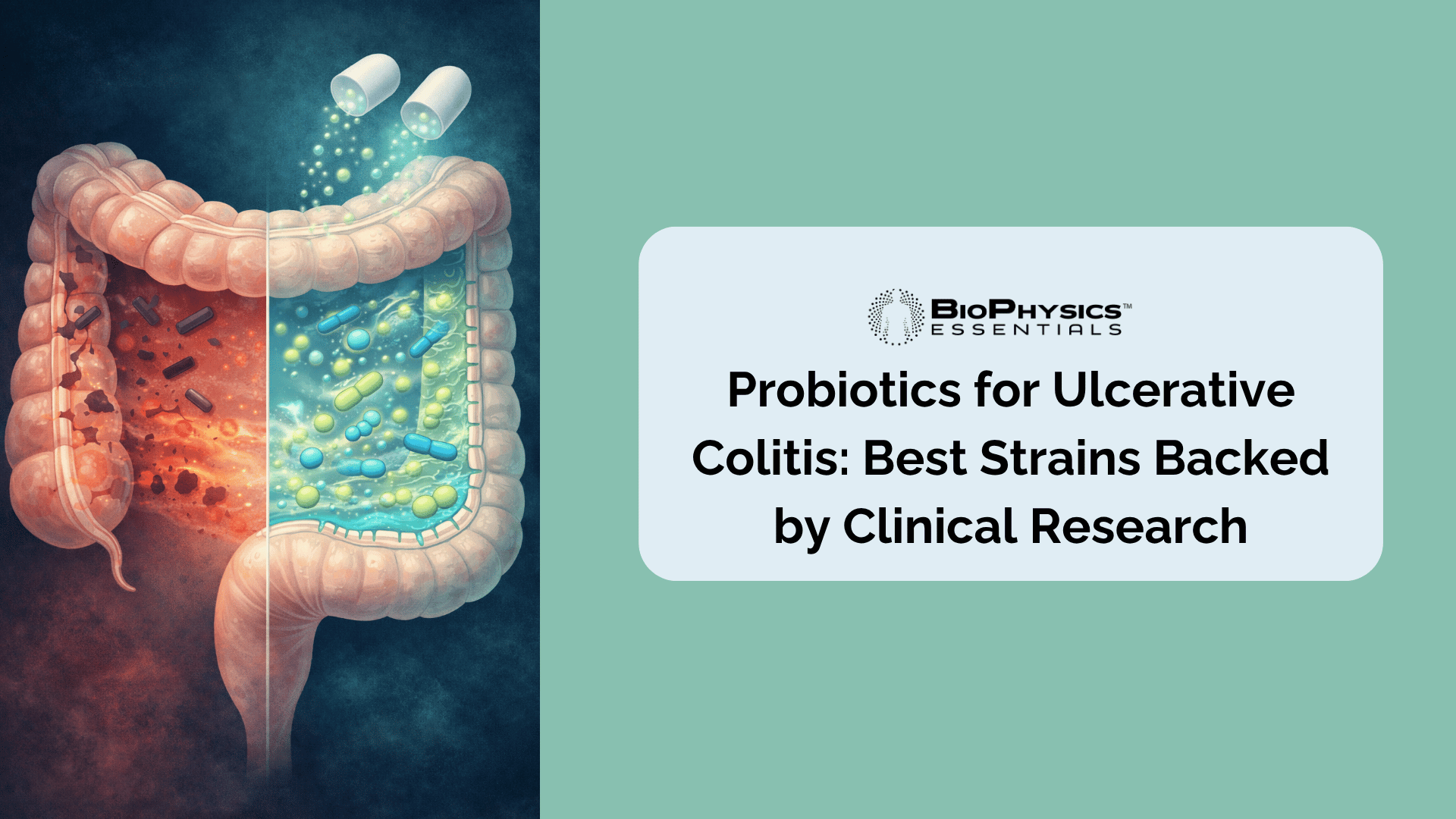
Probiotics for Ulcerative Colitis: Best Strains Backed by Clinical Research
What the peer-reviewed science says about probiotics and UC—and which strains have the most evidence behind them
Ulcerative colitis is a chronic inflammatory condition of the large intestine that affects roughly 1 in 200 people in Western countries—and that number is rising.[1] For the millions living with UC, managing flares, maintaining remission, and finding strategies that complement standard medical care is an ongoing challenge. Probiotics have emerged as one of the most actively studied adjunct approaches, with a growing body of clinical trials examining whether targeted bacterial strains can meaningfully shift gut inflammation and mucosal healing.
The answer is nuanced: not all probiotics are equal, and the evidence varies considerably by strain, formulation, and disease phase. But for specific strains—particularly those backed by randomized controlled trials—the clinical picture is increasingly compelling.
This article reviews the peer-reviewed science on probiotics for ulcerative colitis, explains the biological mechanisms by which they act, and examines which specific strains found in MicroBiome Restore have meaningful clinical evidence for UC support. It also connects to the broader context of probiotics for IBD, of which UC is the most probiotic-responsive subtype.
Key Takeaways
- Gut dysbiosis is central to UC pathogenesis. People with UC show consistent depletion of Lactobacillus, Bifidobacterium, and butyrate-producing species alongside expansion of pro-inflammatory bacteria.[2]
- Probiotics significantly reduce relapse risk. An umbrella meta-analysis of 20 systematic reviews found that probiotic supplementation reduced relapse risk by 45% compared to placebo (RR = 0.55).[3]
- Bifidobacterium longum reduced UC disease activity scores significantly in an 8-week randomized, double-blind, placebo-controlled trial, with meaningful improvement in endoscopic indices.[4]
- Multi-strain formulas containing Lactobacillus, Bifidobacterium, and Streptococcus thermophilus have demonstrated clinical remission benefits in multiple controlled trials for active UC.[5]
- Lactobacillus rhamnosus shows the broadest microbiome-protective effects in preclinical network meta-analysis, improving gut diversity markers and barrier integrity more consistently than other single strains tested.[6]
- Probiotics are safe for UC patients. Across controlled trials, adverse event rates from probiotic supplementation are comparable to placebo, with no serious safety signals reported.[7]
- Formulation quality matters. Multi-strain probiotics free of synthetic fillers protect the biological integrity of the strains you're taking.
Understanding Ulcerative Colitis
Ulcerative colitis is a form of inflammatory bowel disease (IBD) characterized by chronic, relapsing inflammation of the colonic mucosa. Unlike Crohn's disease, which can affect any segment of the gastrointestinal tract, UC is confined to the large intestine and rectum, and the inflammation is continuous rather than patchy. Clinically, UC presents with diarrhea (often bloody), abdominal cramping, urgency, and fatigue—symptoms that range from mild and intermittent to severe and debilitating.[8]
The global incidence of UC is rising, particularly in newly industrialized countries in Asia, South America, and the Middle East—regions that previously had very low rates.[1] This epidemiological pattern points strongly toward environmental and microbial drivers, not just genetic predisposition. Shifts in diet, antibiotic exposure, hygiene, and microbiome composition are all under investigation as contributing factors.
Current Treatment Landscape
Standard medical therapies for UC include aminosalicylates (5-ASA compounds like mesalazine) for mild-to-moderate disease, corticosteroids for induction of remission, and immunosuppressants or biologics for more refractory cases. While effective for many patients, these therapies carry significant side effect profiles with long-term use, and a substantial proportion of patients do not achieve or sustain remission with conventional approaches alone.[8]
This gap has driven significant interest in microbiome-targeted strategies—including probiotics, prebiotics, and synbiotics—as adjunct interventions that address an upstream driver of UC rather than just suppressing downstream inflammation. For a broader look at how probiotics fit into IBD management, including both UC and Crohn's disease, that context is worth understanding before drilling into the UC-specific evidence.
UC Is Not Just Inflammation — It's a Microbiome Disruption
Research increasingly frames UC as an immune disorder that is initiated and perpetuated by a disrupted gut microbial environment. The colon of a person with active UC looks fundamentally different at the bacterial level than the colon of a healthy individual. Restoring that bacterial landscape—not just suppressing symptoms—is where probiotic therapy offers unique potential.
The Gut Microbiome in UC: What Goes Wrong
A central finding across microbiome research is that UC is associated with a characteristic pattern of microbial disruption—a state called gut dysbiosis. Several consistent shifts appear in the UC microbiome that distinguish it from healthy controls and that correlate with disease severity.[2]
A 2023 literature review examining the gut microbiome in UC pathogenesis documented significant reductions in beneficial bacterial populations including Bifidobacterium longum, Faecalibacterium prausnitzii, Roseburia intestinalis, and Eubacterium rectale—alongside expansions of potentially inflammatory species such as Escherichia-Shigella, Bacteroides species, and Clostridioides difficile.[2] The loss of butyrate-producing bacteria in particular is functionally significant: butyrate is the primary fuel source for colonocytes, and its depletion compromises epithelial energy supply and barrier integrity simultaneously.
A clinical study using 16S rRNA gene sequencing in UC patients documented an inverse relationship between Lactobacillus and Faecalibacterium prausnitzii levels and disease severity—meaning the lower these beneficial bacteria dropped, the worse the clinical picture. Six months after treatment, increases in Lactobacillus were observed alongside measurable clinical improvement.[9]

The Tight Junction Problem: How Dysbiosis Breaks Down the Gut Wall
In healthy intestinal tissue, tight junction proteins (including occludin, claudin, and ZO-1) form physical barriers between epithelial cells that prevent bacterial antigens and endotoxins from crossing into systemic circulation. In UC, dysbiosis reduces microbial production of short-chain fatty acids (SCFAs)—particularly butyrate—that are essential for maintaining tight junction integrity. The result is a permeable intestinal lining that allows pro-inflammatory signals to continuously trigger the immune system. This is why barrier repair is a core mechanism through which probiotics are thought to benefit UC.
Why Microbial Diversity Matters for Remission
Studies show that UC patients with lower microbiome diversity have a higher risk of relapse. A prospective study found that UC patients in remission who subsequently relapsed had lower bacterial diversity at baseline, with a higher proportion of Bacteroides species—a finding that independently predicted disease recurrence.[2] The clinical implication is direct: strategies that broaden microbial diversity and restore depleted beneficial species may prolong remission periods. This is a core rationale for multi-strain probiotic supplementation in UC.
How Probiotics Work Against UC Inflammation
The mechanisms by which probiotics exert effects in UC are increasingly well characterized. Rather than acting as a simple anti-inflammatory, probiotics work through several overlapping pathways that address the root microbial disruption in the disease.
1. Intestinal Barrier Reinforcement
Multiple probiotic strains—particularly Lactobacillus plantarum and Bifidobacterium bifidum—have been shown to upregulate the expression of tight junction proteins, directly repairing the mucosal barrier that becomes compromised in UC. L. plantarum increases expression of claudin, occludin, and ZO-1 through multiple signaling pathways, reducing mucosal permeability and limiting antigen penetration from the gut lumen into systemic circulation.[10] Understanding how probiotics repair the intestinal barrier is central to understanding their role in UC specifically.
2. Immune Modulation and Anti-Inflammatory Cytokine Shifts
Probiotics modulate the immune system at the mucosal level by influencing the balance between pro-inflammatory cytokines (TNF-α, IL-1β, IL-6, IL-8) and anti-inflammatory signals (primarily IL-10 and TGF-β). Several Lactobacillus and Bifidobacterium strains activate regulatory T cells (Tregs) and shift the immune environment away from the Th1/Th17 inflammatory axis that drives UC pathology. A 2023 review of experimental research documented that B. bifidum improves tight junction barrier function through TLR-2 receptor activation, while L. rhamnosus and related strains downregulate NF-κB—one of the primary molecular switches for intestinal inflammation.[5]
3. Short-Chain Fatty Acid Production
Probiotic bacteria ferment dietary fiber and prebiotic substrates to produce SCFAs, particularly butyrate. Butyrate is the preferred energy source for colonocytes and plays a critical role in maintaining the intestinal epithelial barrier. Depleted SCFA production is a hallmark of UC-associated dysbiosis, and restoring SCFA-producing bacterial populations is one mechanism by which probiotics are believed to support mucosal healing. Understanding how to increase SCFA production through diet and probiotics has direct clinical relevance for UC patients.
4. Competitive Exclusion of Pathogens
Probiotic bacteria compete with pathogenic species for mucosal adhesion sites and nutritional resources. By colonizing the intestinal epithelium, strains like Lactobacillus acidophilus, Lactobacillus rhamnosus, and Bifidobacterium longum physically block the adherence and invasion of disease-associated bacteria. Some strains also produce bacteriocins—antimicrobial peptides that directly inhibit pathogen growth.[11] For a deeper look at the antimicrobial mechanisms of probiotic bacteria, that perspective helps contextualize their role in IBD.
5. Microbiome Restoration and Diversity
Supplementing with high-diversity probiotic formulas may help reestablish the microbial communities depleted in UC. A 2023 systematic review and network meta-analysis of preclinical evidence found that L. rhamnosus was the single most effective strain for improving microbial diversity (Shannon index) in colitis models, while several Bifidobacterium species were consistently associated with microbiota rebalancing.[6]

Best Probiotic Strains for Ulcerative Colitis
The evidence base for specific strains varies—some have robust clinical trial data, others strong mechanistic and preclinical evidence. The strains below are all found in MicroBiome Restore and represent the most clinically relevant for UC based on current peer-reviewed literature.

Bifidobacterium longum — The Clinical Standout
Bifidobacterium longum has the most direct randomized controlled trial evidence specifically for UC induction of remission. In a multicenter, randomized, double-blind, placebo-controlled trial by Tamaki et al., 56 patients with mild to moderately active UC received either B. longum 536 (BB536) or placebo for 8 weeks. Disease activity scores (UCDAI) declined significantly in the probiotic group (p < 0.01) but not in the placebo group, and BB536-treated patients also showed significant improvements in endoscopic indices and Mayo subscores—objective measures of mucosal healing—that the placebo group did not demonstrate.[4] The Rachmilewitz endoscopic index, a validated tool for assessing mucosal appearance, showed meaningful improvement in the BB536 arm, suggesting benefit at the tissue level. Prior work had also shown that a synbiotic combining B. longum with an inulin prebiotic produced significant reduction in UC activity in a pilot RCT, with greater improvements observed in the synbiotic group than with either component alone—reinforcing the value of pairing this strain with prebiotic support.[4]
Lactobacillus rhamnosus — Broad Microbiome Restoration
Lactobacillus rhamnosus is one of the most thoroughly studied probiotic species in IBD research. A 2023 preclinical network meta-analysis evaluating 24 different probiotic species across 42 studies found that L. rhamnosus ranked first for improving microbiome diversity and relieving weight loss in colitis models.[6] Multiple L. rhamnosus strains—including the widely studied LGG—restore gut barrier function, downregulate LPS-induced inflammatory cytokines including TNF-α and IL-6, and have demonstrated safety and tolerability in UC patients in randomized trials.[5] A prior clinical RCT demonstrated the long-term effects and safety of L. rhamnosus GG in UC patients, showing its appropriateness for ongoing maintenance use.[5] Explore the comprehensive clinical evidence for L. rhamnosus across multiple conditions.
Lactobacillus acidophilus — Cytokine Modulation and Barrier Support
Lactobacillus acidophilus produces significant amounts of lactic acid that inhibit pathogenic bacterial growth, and its bile tolerance supports colonization throughout the intestinal tract. Cell wall components of L. acidophilus LA1 (including EPS, proteins, and lipophosphates) directly inhibit NF-κB activation in human intestinal HT-29 cells and prevent the release of pro-inflammatory downstream factors—a mechanism highly relevant to UC, in which NF-κB signaling drives continuous mucosal inflammation.[5] This strain appears in multi-strain clinical combinations that have shown UC remission benefits in multiple trials, and its long track record makes it one of the most validated individual species for gastrointestinal support. For a thorough exploration of the benefits of Lactobacillus acidophilus, the mechanisms are reviewed in detail.
Lactobacillus plantarum — Tight Junction Repair and NF-κB Inhibition
Lactobacillus plantarum is one of the most mechanistically well-characterized probiotic species for intestinal barrier function in UC. A 2023 review specifically on L. plantarum mechanisms in UC documented that this strain improves mucosal integrity through six distinct pathways: regulating immune response, inhibiting oxidative stress, upregulating tight junction proteins, promoting mucin formation (MUC-2 production), improving gut microbiota composition, and elevating SCFA levels.[10] Clinical trials have reported that L. plantarum reduces chronic mucosal inflammation in UC patients, and both animal and human studies consistently show anti-inflammatory cytokine shifts. It appears as a component in VSL#3—the multi-strain preparation with the strongest clinical trial record in UC. Discover additional details on Lactobacillus plantarum health benefits.
Bifidobacterium breve — Anti-Inflammatory Cytokine Suppression
Bifidobacterium breve reduces the intestinal inflammatory response by producing exopolysaccharides (EPS) that downregulate TNF-α and IL-6, while simultaneously increasing mucin-2 (MUC-2) levels and the number of goblet cells—the epithelial cells responsible for maintaining the protective mucus layer over the gut lining.[5] B. breve is one of the eight strains in VSL#3, the most clinically studied multi-strain probiotic in UC. B. breve also upregulates tight junction proteins, reducing the intestinal permeability that permits inflammatory antigens to reach immune cells in the gut wall.[5]
Bifidobacterium bifidum — Barrier Repair Through TLR-2
Bifidobacterium bifidum reinforces intestinal epithelial barrier function through a distinct mechanism: connecting to TLR-2 receptors on epithelial cells and activating the p38 kinase pathway to increase tight junction protein expression.[5] In animal models of UC, multiple B. bifidum strains have demonstrated significant reductions in colitis severity, and some strains also activate aryl hydrocarbon receptor (AHR) signaling—a pathway that regulates intestinal immune homeostasis. Learn more about addressing Bifidobacterium deficiency, which is a consistent finding in active UC.
Lactobacillus reuteri — Mucosal IgA and Barrier Defense
Lactobacillus reuteri supports the mucosal immune system through a specific mechanism relevant to UC: it adheres to intestinal epithelial cells (including Caco-2 and HT-29 cell lines) and activates the NF-κB signaling cascade to upregulate mucosal IgA expression. IgA binds pathogenic bacteria and their toxins, neutralizing microbial immunogenicity and blocking pathogen adhesion to epithelial receptors. By enhancing this first-line mucosal immune defense, L. reuteri helps prevent the chronic bacterial invasion that sustains UC inflammation.[5] The clinical evidence for Lactobacillus reuteri benefits spans multiple gastrointestinal conditions.
Streptococcus thermophilus — Remission Induction as Part of Multi-Strain Therapy
Streptococcus thermophilus appears in VSL#3 and contributes to its documented remission benefits in UC. A 2024 meta-analysis of 45 randomized controlled trials in UC identified multi-strain formulas containing lactic acid bacteria, Streptococcus, and Bifidobacterium as among the most efficacious probiotic interventions for clinical and endoscopic remission.[7] The benefits of Streptococcus thermophilus for gut health are reviewed in depth elsewhere in this series.
Bacillus coagulans and Bacillus subtilis — Spore-Forming Resilience
Spore-forming Bacillus strains offer a unique advantage in inflammatory gut conditions: they survive gastric acid and bile exposure with significantly higher viability than non-spore formers, ensuring active delivery to the colon where UC pathology is concentrated. Bacillus coagulans has been studied for its anti-inflammatory properties in gastrointestinal conditions, including effects on intestinal barrier integrity and cytokine modulation. Explore the evidence base for Bacillus coagulans and Bacillus subtilis individually.
Strain Evidence Summary
| Strain | Primary UC Mechanism | Highest Level of Evidence |
|---|---|---|
| Bifidobacterium longum | Reduces UCDAI scores; improves endoscopic indices | Randomized, double-blind, placebo-controlled trial[4] |
| Lactobacillus rhamnosus | Restores microbiome diversity; NF-κB inhibition | Preclinical network meta-analysis + clinical RCTs[6] |
| Lactobacillus acidophilus | NF-κB suppression; barrier protection; part of VSL#3 | Multi-strain clinical trials; mechanistic studies[5] |
| Lactobacillus plantarum | Tight junction upregulation; mucin production; SCFA elevation | Clinical trials + mechanistic reviews[10] |
| Bifidobacterium breve | TNF-α/IL-6 suppression; goblet cell support; part of VSL#3 | Multi-strain RCTs; preclinical studies[5] |
| Bifidobacterium bifidum | TLR-2 mediated tight junction repair | Mechanistic studies; preclinical models[5] |
| Lactobacillus reuteri | Mucosal IgA upregulation; pathogen exclusion | Mechanistic studies; multi-strain clinical data[5] |
| Streptococcus thermophilus | Multi-strain synergy for remission induction | RCTs (as part of VSL#3); meta-analyses[7] |
All 26 Strains. Zero Fillers. One Daily Serving.
MicroBiome Restore contains every strain discussed in this article—plus 18 more evidence-backed probiotic species—at 15 billion CFU per serving, in pullulan capsules with 7 certified organic whole-food prebiotics. No microcrystalline cellulose. No magnesium stearate. No titanium dioxide.
Why Multi-Strain Formulas Matter More in UC
A consistent finding across the probiotic-UC literature is that single-strain interventions show more variable results than multi-strain formulations. The clinical trial evidence supports this: the probiotic with the most robust remission data in UC is VSL#3, a combination of eight strains including Lactobacillus casei, L. plantarum, L. acidophilus, L. delbrueckii subsp. bulgaricus, Bifidobacterium longum, B. breve, B. infantis, and Streptococcus thermophilus—all of which are present in MicroBiome Restore.[5]

What the Latest Meta-Analyses Show
A comprehensive 2025 umbrella meta-analysis of 20 systematic reviews covering 46 datasets found that probiotic supplementation reduced relapse risk in IBD patients by 45% compared to placebo (RR = 0.55; 95% CI: 0.22–0.88). Critically, this analysis also found that probiotics performed comparably to mesalazine—the standard first-line maintenance therapy for UC—with no statistically significant difference between them (RR: 1.00; 95% CI: 0.86–1.14).[3] This is a notable finding for patients interested in integrative approaches.
A 2024 overview and updated meta-analysis in United European Gastroenterology Journal, covering 45 RCTs, concluded that current European guidelines already acknowledge probiotics—primarily multi-strain preparations—as potentially useful for UC and relapsing pouchitis, while not supporting their use in Crohn's disease (where evidence is weaker).[7] This distinction between UC and CD is important: UC is the IBD subtype most responsive to probiotic intervention.
A 2024 systematic review and meta-analysis in the European Journal of Nutrition, examining 13 RCTs with 930 UC patients, found that probiotic supplementation boosted clinical remission rates significantly for patients in remission (OR: 2.09; 95% CI: 1.32–3.30; p = 0.002), meaning probiotics were more than twice as effective as placebo for maintaining remission—arguably the most clinically relevant outcome for patients with this relapsing-remitting disease.[12]
The Remission Maintenance Advantage
In UC, maintaining remission is often harder than inducing it. Standard aminosalicylate therapy fails to prevent relapse in up to 76% of patients within one year without treatment. The finding that multi-strain probiotic supplementation can more than double the odds of staying in remission compared to placebo—as reported in a 2024 meta-analysis of controlled trials—represents a meaningful clinical opportunity for adjunct support.[12]
The Synbiotic Advantage: Prebiotics That Feed UC-Relevant Strains
Evidence from UC trials specifically supports combining probiotic strains with prebiotic substrates. The synbiotic combination of B. longum with an inulin prebiotic (Synergy 1) showed significantly greater reduction in UC disease activity than either component administered alone—establishing a proof of concept that probiotic strains perform better when they have nutritional support to colonize and persist in the colon.[4]
MicroBiome Restore's prebiotic matrix—including Jerusalem artichoke (a rich source of inulin), acacia fiber, and maitake mushroom—provides the fermentable fiber substrates that selectively nourish Bifidobacterium and Lactobacillus populations. The synbiotic design mirrors the clinical trial approach that showed the strongest UC benefit.
What to Look for in a Probiotic for UC
If you have ulcerative colitis and are evaluating a probiotic supplement, the clinical literature points to several criteria that meaningfully separate effective formulations from generic ones. This is not a condition where any off-the-shelf probiotic will do.
Strain Specificity: Make Sure the Right Species Are Present
The most clinically validated strains for UC include Bifidobacterium longum, Bifidobacterium breve, Lactobacillus rhamnosus, Lactobacillus acidophilus, Lactobacillus plantarum, and Streptococcus thermophilus—species that appear repeatedly in the highest-quality clinical evidence. A probiotic for UC should list its strains to species level (ideally to strain designation) so you can verify what you're taking matches what's been studied.
Multi-Strain Diversity Over Single Strains
UC involves broad microbial disruption across multiple bacterial genera. A multi-strain formula covering both Lactobacillus and Bifidobacterium genera—the two most consistently depleted in UC microbiome studies—is better positioned to address this systemic disruption than any individual species. The clinical evidence clearly favors combination formulas.
Clean Formulation: The Filler Problem
The colonic mucosa in UC is already inflamed and compromised. Adding a probiotic that contains microcrystalline cellulose (MCC), magnesium stearate, titanium dioxide, or other synthetic flow agents adds unnecessary chemical exposure to an already reactive intestinal environment. Learning to read supplement labels for hidden fillers is a practical skill for anyone with IBD. Probiotic capsule material also matters: pullulan capsules, derived from natural fermentation, provide delayed release and are themselves prebiotic in character.

Prebiotic Co-Administration
The clinical evidence for synbiotics in UC is stronger than for standalone probiotics. Pairing the right probiotic strains with fermentable prebiotic fibers—particularly inulin and acacia—supports colonization persistence and SCFA production. The combined benefits of prebiotics and probiotics are particularly relevant for conditions like UC where microbiome rebuilding is the goal.
Important: Probiotics as Adjunct Therapy, Not Replacement
The clinical evidence supports probiotics as a complementary strategy alongside conventional UC therapy—not as a replacement for medical treatment. If you have active UC or are managing the condition medically, discuss probiotic supplementation with your gastroenterologist before starting. People on immunosuppressant therapy or with severely compromised immune function should seek specific medical guidance. That said, the safety record of probiotic supplementation in UC patients is strong: controlled trials consistently report adverse event rates comparable to placebo.[7]
How MicroBiome Restore Addresses the UC Evidence
MicroBiome Restore was formulated to address what the clinical evidence identifies as most important: comprehensive strain diversity across Lactobacillus and Bifidobacterium genera, spore-forming Bacillus strains for resilience, certified organic whole-food prebiotic substrates (including inulin-rich Jerusalem artichoke and acacia fiber), and a complete absence of the synthetic flow agents and fillers found in most commercial probiotics. The 26-strain formula at 15 billion CFU per serving reflects the multi-strain design that has the strongest clinical evidence for UC outcomes. Read the complete guide to MicroBiome Restore for full ingredient details.
Frequently Asked Questions
What is the best probiotic for ulcerative colitis?
Based on the current evidence, multi-strain formulas containing Bifidobacterium longum, Lactobacillus rhamnosus, Lactobacillus acidophilus, Lactobacillus plantarum, Bifidobacterium breve, and Streptococcus thermophilus have the strongest combined clinical trial support for UC. No single strain has a stronger evidence base than multi-strain combinations for this condition. Look for a formula that covers both Lactobacillus and Bifidobacterium genera with at least 10–15 billion CFU per serving, paired with prebiotic fibers.
Can probiotics help during an active UC flare?
Some clinical trials have evaluated probiotics for active UC and have shown measurable reductions in disease activity scores, including endoscopic improvements. The 2024 European Journal of Nutrition meta-analysis found that multi-strain probiotics were more effective than placebo for both induction (active disease) and maintenance (remission) outcomes—though the remission maintenance effect was statistically stronger.[12] During an active flare, probiotics should be used as an adjunct to, not a substitute for, prescribed medical therapy. Consult your gastroenterologist before making changes during a flare.
How long does it take for probiotics to work for UC?
Clinical trials studying probiotic effects in UC have typically evaluated outcomes at 8 to 52 weeks. The B. longum RCT showed significant disease activity score reductions at 8 weeks.[4] How long probiotics take to work depends on the condition, the strains used, and individual microbiome baseline—but most research suggests meaningful changes occur within 4–12 weeks of consistent use.
Are probiotics safe for people with ulcerative colitis?
The safety profile of probiotics in UC is well established. A 2024 meta-analysis and overview of 45 RCTs reported that adverse event rates in probiotic groups were comparable to placebo, with no serious safety signals identified.[7] However, individuals on immunosuppressive medications, those with severe UC, or those who have undergone colostomy or pouch surgery should consult their healthcare provider before starting any new supplement.
Do probiotics work for Crohn's disease the same way they do for UC?
No—and this distinction matters. European clinical guidelines acknowledge probiotic evidence for UC and pouchitis, but do not support probiotic use for Crohn's disease, where trials have consistently shown weaker or null effects.[7] UC and Crohn's have different pathological profiles, and the broader IBD picture for probiotics is one where UC patients stand to benefit most from this approach.
Can diet affect how well probiotics work for UC?
Diet significantly influences the gut microbiome environment that probiotics are trying to restore. High-fat, low-fiber diets reduce populations of beneficial Firmicutes and deplete prebiotic substrates that fuel probiotic colonization. Diets rich in fermentable fiber—which feed SCFA-producing bacteria and the Bifidobacterium strains most depleted in UC—create a more hospitable environment for probiotic activity. The clinical literature on gut microbiome health increasingly frames diet and probiotics as synergistic rather than interchangeable strategies.
Support Your Gut Microbiome With Evidence-Backed Strains
MicroBiome Restore delivers 26 clinically studied probiotic strains, 7 certified organic whole-food prebiotics, and a complete absence of the fillers that compromise gut health in most commercial formulas. Built by a formulator who understands the science—not the manufacturing shortcuts.
References
- Ng, S. C., Shi, H. Y., Hamidi, N., Underwood, F. E., Tang, W., Benchimol, E. I., ... & Kaplan, G. G. (2018). Worldwide incidence and prevalence of inflammatory bowel disease in the 21st century: a systematic review of population-based studies. The Lancet, 390(10114), 2769–2778. https://doi.org/10.1016/S0140-6736(17)32448-0
- Swirkosz, G., Szczygiel, A., Logon, K., & Majewski, M. (2023). The role of the microbiome in the pathogenesis and treatment of ulcerative colitis—a literature review. Biomedicines, 11(12), 3144. https://doi.org/10.3390/biomedicines11123144
- Ghasemi, M., Mohammadi, F., Ghasemzadeh, A., Mousavi, S. E., & Zargar, M. (2025). Probiotics and inflammatory bowel disease: an umbrella meta-analysis of relapse, recurrence, and remission outcomes. Gut Pathogens, 17, Article 37. https://pmc.ncbi.nlm.nih.gov/articles/PMC12486786/
- Tamaki, H., Nakase, H., Inoue, S., Kawanami, C., Itani, T., Ohana, M., ... & Shibatouge, M. (2016). Efficacy of probiotic treatment with Bifidobacterium longum 536 for induction of remission in active ulcerative colitis: a randomized, double-blinded, placebo-controlled multicenter trial. Digestive Endoscopy, 28(1), 67–74. https://doi.org/10.1111/den.12553
- Huang, C., Hao, W., Wang, X., Zhou, R., & Lin, Q. (2023). Probiotics for the treatment of ulcerative colitis: a review of experimental research from 2018 to 2022. Frontiers in Microbiology, 14, 1211271. https://doi.org/10.3389/fmicb.2023.1211271
- Jin, W., Ai, H., Huang, Q., Li, C., He, X., Jin, Z., & Zuo, Y. (2023). Preclinical evidence of probiotics in ulcerative colitis: a systematic review and network meta-analysis. Frontiers in Pharmacology, 14, 1187911. https://doi.org/10.3389/fphar.2023.1187911
- Estevinho, M. M., Yuan, Y., Rodríguez-Lago, I., Sousa-Pimenta, M., Dias, C. C., Barreiro-de Acosta, M., Jairath, V., & Magro, F. (2024). Efficacy and safety of probiotics in IBD: an overview of systematic reviews and updated meta-analysis of randomized controlled trials. United European Gastroenterology Journal, 12(7), 960–981. https://doi.org/10.1002/ueg2.12636
- Voelker, R. (2024). What is UC? JAMA, 331(8), 716. https://doi.org/10.1001/jama.2023.23814
- Ezzat Mohamed, A., Samy Mohamed, A., Hassan Zakaria, N., Mohamed Baddour, N., & Header, D. A. (2022). Impact of gut microbiome alteration in ulcerative colitis patients on disease severity and outcome. Revista de Gastroenterología de México (English Edition), 88(3), 246–255. https://doi.org/10.1016/j.rgmxen.2022.07.006
- Li, Y., Gong, L., & Fu, J. (2023). Progress on the mechanisms of Lactobacillus plantarum to improve intestinal barrier function in ulcerative colitis. Journal of Bioenergetics and Biomembranes, 55(5), 317–331. https://doi.org/10.1007/s10863-023-09986-3
- Tran, T. T., Cousin, F. J., Lynch, D. B., Menon, R., Brulc, J., Brown, J. R. M., ... & O'Toole, P. W. (2019). Bacteriocin-containing probiotic Lactobacillus strains and their use in managing gut microbiome. Beneficial Microbes, 10(5), 495–507. https://doi.org/10.3920/BM2018.0151
- Wang, X., Zhou, C., Zhang, S., Ma, Y., Xiao, W., & Guo, Y. (2024). Additive efficacy and safety of probiotics in the treatment of ulcerative colitis: a systematic review and meta-analysis. European Journal of Nutrition, 63(5), 1395–1411. https://doi.org/10.1007/s00394-023-03307-5


'%3e%3cg%20id='Final-Copy-2_2_'%20transform='translate(1275.000000,%20200.000000)'%3e%3cpath%20class='st0'%20d='M7.4,12.8h6.8l3.1-11.6H7.4C4.2,1.2,1.6,3.8,1.6,7S4.2,12.8,7.4,12.8z'/%3e%3c/g%3e%3c/g%3e%3c/g%3e%3cg%20id='final---dec.11-2020'%3e%3cg%20id='_x30_208-our-toggle'%20transform='translate(-1275.000000,%20-200.000000)'%3e%3cg%20id='Final-Copy-2'%20transform='translate(1275.000000,%20200.000000)'%3e%3cpath%20class='st1'%20d='M22.6,0H7.4c-3.9,0-7,3.1-7,7s3.1,7,7,7h15.2c3.9,0,7-3.1,7-7S26.4,0,22.6,0z%20M1.6,7c0-3.2,2.6-5.8,5.8-5.8%20h9.9l-3.1,11.6H7.4C4.2,12.8,1.6,10.2,1.6,7z'/%3e%3cpath%20id='x'%20class='st2'%20d='M24.6,4c0.2,0.2,0.2,0.6,0,0.8l0,0L22.5,7l2.2,2.2c0.2,0.2,0.2,0.6,0,0.8c-0.2,0.2-0.6,0.2-0.8,0%20l0,0l-2.2-2.2L19.5,10c-0.2,0.2-0.6,0.2-0.8,0c-0.2-0.2-0.2-0.6,0-0.8l0,0L20.8,7l-2.2-2.2c-0.2-0.2-0.2-0.6,0-0.8%20c0.2-0.2,0.6-0.2,0.8,0l0,0l2.2,2.2L23.8,4C24,3.8,24.4,3.8,24.6,4z'/%3e%3cpath%20id='y'%20class='st3'%20d='M12.7,4.1c0.2,0.2,0.3,0.6,0.1,0.8l0,0L8.6,9.8C8.5,9.9,8.4,10,8.3,10c-0.2,0.1-0.5,0.1-0.7-0.1l0,0%20L5.4,7.7c-0.2-0.2-0.2-0.6,0-0.8c0.2-0.2,0.6-0.2,0.8,0l0,0L8,8.6l3.8-4.5C12,3.9,12.4,3.9,12.7,4.1z'/%3e%3c/g%3e%3c/g%3e%3c/g%3e%3c/g%3e%3c/svg%3e) Your Privacy Choices
Your Privacy Choices
Share and get 15% off!
Simply share this product on one of the following social networks and you will unlock 15% off!